Booklouse
Scientific Name: Liposcelis spp. (Common household genera)
Order & Family: Order: Psocodea (formerly Psocoptera), Family: Liposcelididae
Size: Very small, typically 1 mm to 2 mm in length.
Natural Habitat
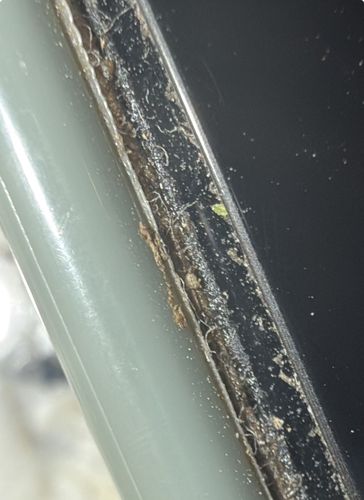
They thrive in high-humidity indoor environments, often found in damp areas like bathrooms, window sills (as seen in the image), basements, or near moldy food or paper. They are often associated with mold growth in crevices.
Diet & Feeding
They feed on microscopic molds, fungi, starch, paper glue, and sometimes grain products. They do not bite humans or suck blood.
Behavior Patterns
Booklice are flightless and move by running relatively quickly when disturbed. They reproduce rapidly in humid conditions and are often seen congregating in cracks and crevices where moisture accumulates.
Risks & Benefits
Risks: They are considered nuisance pests. They can contaminate stored food products and can trigger allergies in some people due to their body parts and feces. In large numbers, they indicate a moisture problem. Benefits: They play a minor role as scavengers in nature but offer little benefit inside a home.
Identified on: 2/16/2026