
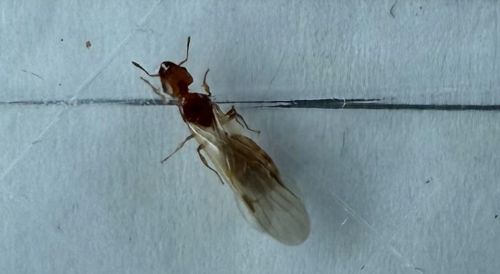
Winged Ant (Queen or Male Alate)
Formicidae (numerous genera and species)
- Order & Family
- Order: Hymenoptera, Family: Formicidae
- Size
- Winged ants (alates) vary significantly in size by species, typically ranging from 3 mm to 20 mm or more, with queens generally being larger than males and workers.
Natural Habitat
Ants are found in almost all terrestrial habitats worldwide, from forests and grasslands to deserts and urban environments. Nests can be found underground, in wood, under rocks, or within structures.
Diet & Feeding
Ants have a diverse diet depending on the species. Many are omnivorous, feeding on honeydew (excreted by aphids and other sap-sucking insects), nectar, seeds, fungi, other insects (both living and dead), and human food scraps. Larvae are typically fed by workers with protein-rich food.
Behavior Patterns
Nuptial flights typically occur after rain, especially in warmer months. Males and virgin queens fly out of their nests to mate in the air. After mating, queens shed their wings and search for a suitable location to establish a new colony, often forming a claustral chamber where they lay their first batch of eggs and care for the larvae until the first workers emerge. Workers forage for food and tend to the queen and brood. Colony growth can be slow initially but accelerates once workers are established.
Risks & Benefits
Risks: Some species of ants are considered pests, invading homes and contaminating food. Some can deliver painful bites or stings (e.g., fire ants). Carpenter ants can weaken wooden structures by nesting within them. Benefits: Ants play crucial roles in ecosystems, including soil aeration and nutrient cycling, seed dispersal, pest control (by preying on other insects), and as a food source for other animals.