
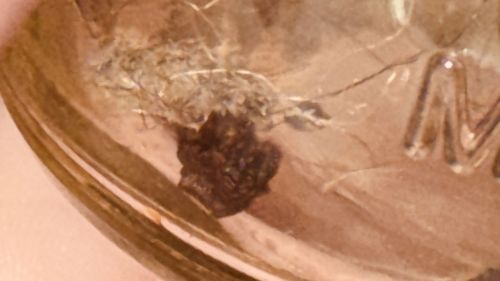
Case-bearing Clothes Moth Larva
Tinea pellionella
- Order & Family
- Lepidoptera, Tineidae
- Size
- Larvae: 10-14 mm (0.4-0.55 inches); Adult moths: wingspan of 9-16 mm (0.35-0.63 inches)
Natural Habitat
Indoors, particularly in dark, undisturbed areas where animal-based materials are stored, such as closets, attics, and storage chests. They can also be found in natural settings feeding on animal remains.
Diet & Feeding
Keratin-containing materials, including wool, fur, feathers, silk, felt, and leather. They also feed on lint, dust, and synthetic fibers if they contain traces of natural animal products.
Behavior Patterns
The larva constructs a portable silken case incorporating fibers from its food source, which it carries with it as it feeds and grows. It rarely leaves this case. The case grows with the larva, being enlarged or refurbished as needed. Adults are poor flyers and prefer to walk or run. They are nocturnal and are attracted to light but typically stay in darker areas where their larvae feed. The full life cycle from egg to adult can take 2-3 months to 2 years, depending on environmental conditions and food availability.
Risks & Benefits
Risks: Significant pest of textiles and natural fibers, causing damage to clothing, carpets, upholstery, and stored animal products. They do not bite or sting humans and are not known to transmit diseases. Benefits: In natural ecosystems outdoors, they play a minor role in decomposition by breaking down animal remains and discarded natural fibers.