
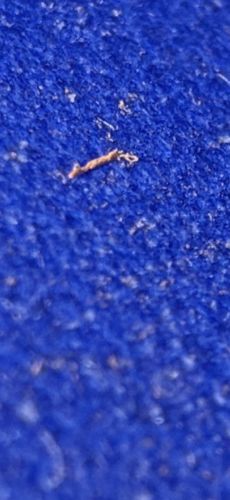
Webbing clothes moth (larva)
Tineola bisselliella
- Order & Family
- Lepidoptera, Tineidae
- Size
- Larvae grow up to 12 mm (0.5 inches); adults have a wingspan of 12-16 mm.
Natural Habitat
Dark, undisturbed areas in residential or commercial buildings, specifically closets, drawers, and storage bins containing animal-based fibers.
Diet & Feeding
Keratin-rich materials including wool, fur, silk, feathers, felt, and leather. They do not eat synthetic fabrics unless blended with natural fibers.
Behavior Patterns
Larvae create silken tunnels or mats while feeding. They avoid light (lucifugous) and spend their entire life cycle in dark corners. They pupate within a silken cocoon camouflaged with debris and fecal pellets.
Risks & Benefits
They are significant structural pests that cause permanent damage to clothing, upholstery, and carpets. They pose no direct health risk to humans but can be a major economic nuisance; they provide minor ecosystem benefits as recyclers of animal remains in nature.