
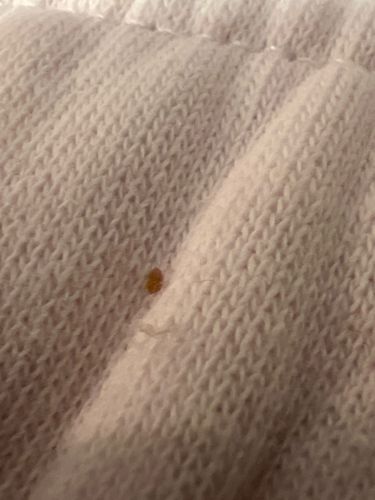
Community identification
Bed bug (juvenile/nymph or fecal spot)
Cimex lectularius
- Order & Family
- Hemiptera, Cimicidae
- Size
- Nymphs can be as small as 1mm; adults are typically 4-5mm.
Natural Habitat
Primarily human dwellings, especially bedrooms; hiding in cracks and crevices of mattresses, bed frames, furniture, walls.
Diet & Feeding
Exclusively feed on the blood of warm-blooded animals, primarily humans. Nymphs feed to molt.
Behavior Patterns
Nocturnal, hiding during the day and emerging at night to feed. They are attracted to carbon dioxide and body heat. They can survive long periods without feeding.
Risks & Benefits
Potential risks include itchy bites, allergic reactions, secondary skin infections from scratching, and significant psychological distress. They are not known to transmit diseases to humans. There are no direct benefits to humans or the ecosystem.