
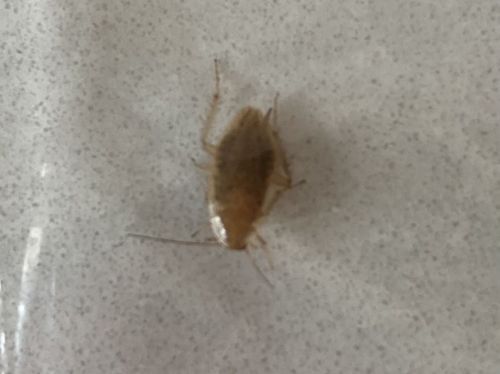
German Cockroach
Blattella germanica
- Order & Family
- Order: Blattodea, Family: Ectobiidae
- Size
- Adults typically range from 1/2 to 5/8 inch (1.3 to 1.6 cm) in length.
Natural Habitat
Primarily indoor pests, found in human dwellings and commercial buildings. They prefer warm, humid environments, especially kitchens and bathrooms, where they can find food, water, and harborage in cracks, crevices, behind appliances, and under sinks.
Diet & Feeding
Omnivorous scavengers; they will eat almost anything, including food scraps, grease, starches, sweets, meats, and even non-food items like soap, glue, and toothpaste. They are particularly attracted to fermenting foods and beverages.
Behavior Patterns
Nocturnal; they are active at night, foraging for food and water. They are known for their rapid reproduction rate, with females producing many oothecae (egg cases) during their lifespan. They are gregarious, often found in groups, and prefer to live in cracks and crevices.
Risks & Benefits
Risks: German cockroaches are significant pests. They can transmit bacteria and pathogens, contaminate food and surfaces, exacerbate allergies and asthma in sensitive individuals through their droppings and shed skins, and are a general nuisance. They are not known to provide any direct benefits to humans or ecosystems, especially in an urban/indoor context. Benefits: None in an indoor pest context. In a broader ecological sense, some cockroaches are detritivores, assisting in decomposition, but this is not applicable to the German cockroach as an urban pest.