
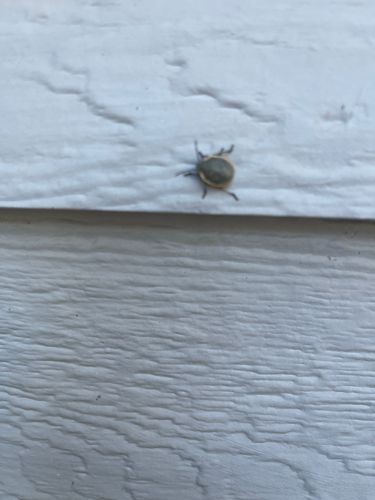
Tick (likely a common species like a dog tick or deer tick)
There are many species of ticks; specific identification from this image alone is difficult. Common genera include Ixodes (e.g., deer tick), Dermacentor (e.g., American dog tick), and Rhipicephalus (e.g., brown dog tick).
- Order & Family
- Order: Ixodida (Ticks), Family: Ixodidae (Hard Ticks) or Argasidae (Soft Ticks). Based on the image, it's likely Ixodidae due to the visible scutum (hard shield).
- Size
- Unfed: 1-5 mm (depending on species). Fed (engorged): Up to 15 mm or more, appearing significantly larger and rounder.
Natural Habitat
Wooded areas, tall grasses, brush, leaf litter, and urban/suburban environments where hosts are present.
Diet & Feeding
Blood of vertebrate hosts (mammals, birds, reptiles, amphibians).
Behavior Patterns
Ticks are parasitic arachnids that latch onto hosts (mammals, birds, reptiles, amphibians) to feed on their blood. They are typically found in grassy, brushy, or wooded areas. They detect hosts by sensing breath, body odor, body heat, moisture, and vibrations. Once on a host, they crawl to a suitable feeding spot and insert their mouthparts to begin feeding. They can remain attached for several days, engorging with blood, before detaching and dropping off to digest and lay eggs (females).
Risks & Benefits
Risks: Ticks are significant vectors of various diseases, including Lyme disease, Rocky Mountain spotted fever, anaplasmosis, ehrlichiosis, babesiosis, and Powassan virus. Tick bites can also cause allergic reactions or local skin irritation. Benefits: While their primary ecological role is as parasites, they do serve as a food source for some animals (e.g., birds, shrews, spiders), though this benefit is often outweighed by disease transmission risks to humans and animals.