
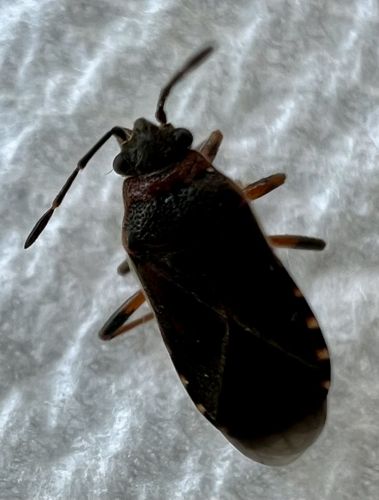
Minute Pirate Bug
Orius insidiosus (a common species, though there are others in the Orius genus)
- Order & Family
- Hemiptera (True Bugs), Anthocoridae (Flower Bugs)
- Size
- Typically 2-5 mm (approximately 0.08-0.2 inches) in length.
Natural Habitat
Found in various agricultural crops, gardens, and natural areas. They live on plants, particularly where their prey is abundant.
Diet & Feeding
Primarily predatory, feeding on small soft-bodied insects and mites such as thrips, aphids, spider mites, and insect eggs. They may also feed on plant sap and pollen, especially when prey is scarce, but this is secondary.
Behavior Patterns
They are active hunters, using their piercing-sucking mouthparts to feed on other small insects or eggs. They are generally seen during warmer months and can fly. They are known for their quick movements.
Risks & Benefits
Benefits: Minute Pirate Bugs are highly beneficial natural enemies in agricultural and garden ecosystems, providing effective biological control against many common pest insects, thus reducing the need for chemical pesticides. Risks: They may bite humans, especially when populations are high or when disturbed, to sample for moisture. The bite can be a bit painful or irritating, but it is not venomous and poses no health risk.