
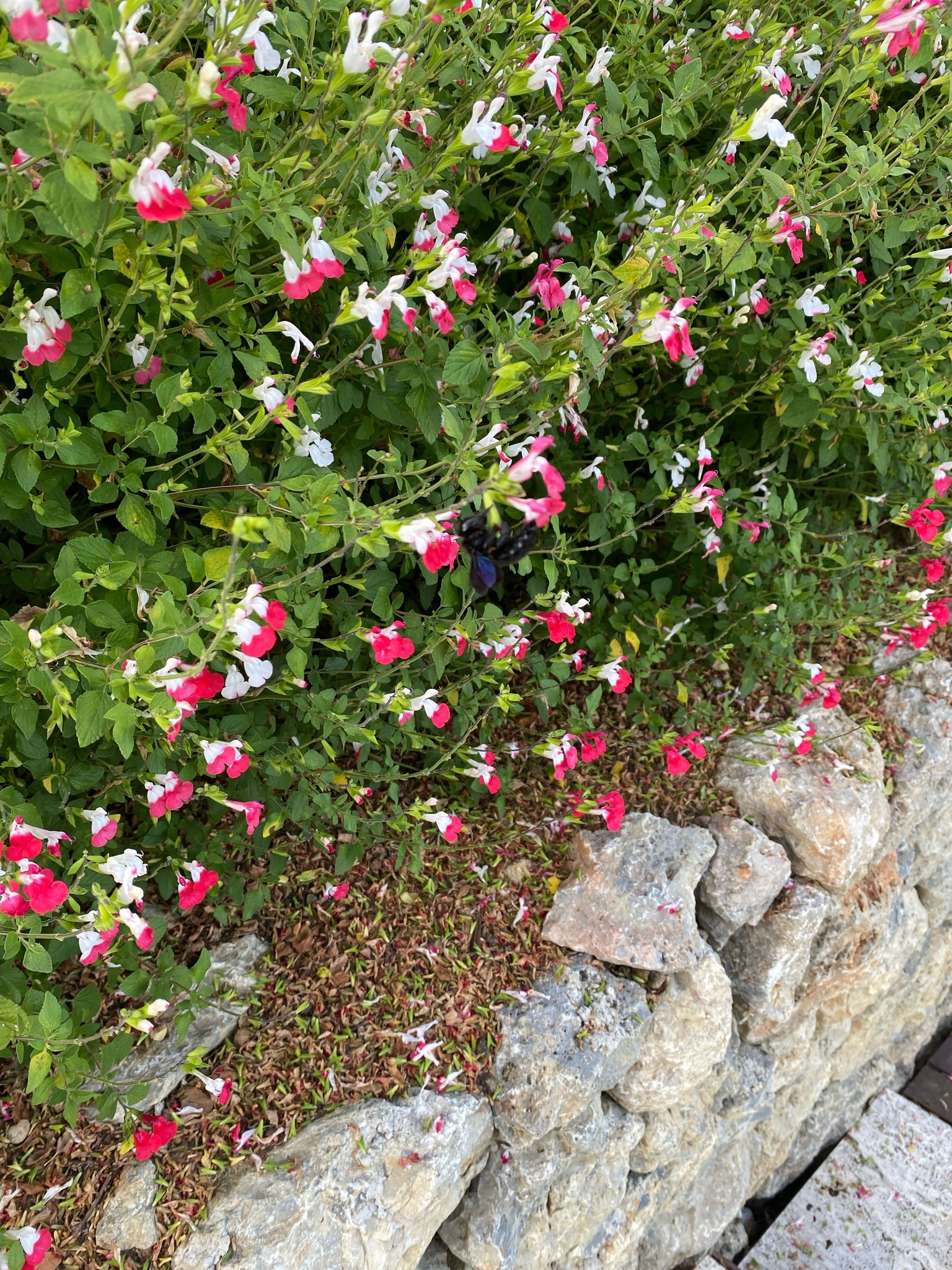
Community identification
Carpenter Bee
Xylocopa violacea
- Order & Family
- Hymenoptera: Apidae
- Size
- 20 to 30 millimeters in length
Natural Habitat
Gardens, parks, and wooded areas near suitable nesting sites such as dead wood or timber structures.
Diet & Feeding
Nectar and pollen collected from a wide variety of flowers; they are known for 'nectar robbing' by piercing the base of long flowers.
Behavior Patterns
Solitary bees that do not live in colonies; they are active during the day and hibernate during winter. Females excavate tunnels in wood to lay eggs in individual chambers.
Risks & Benefits
Benefits the ecosystem as a significant pollinator. Risks include minor structural damage to untreated wood from nesting tunnels; they are generally non-aggressive, though females can sting if handled.