
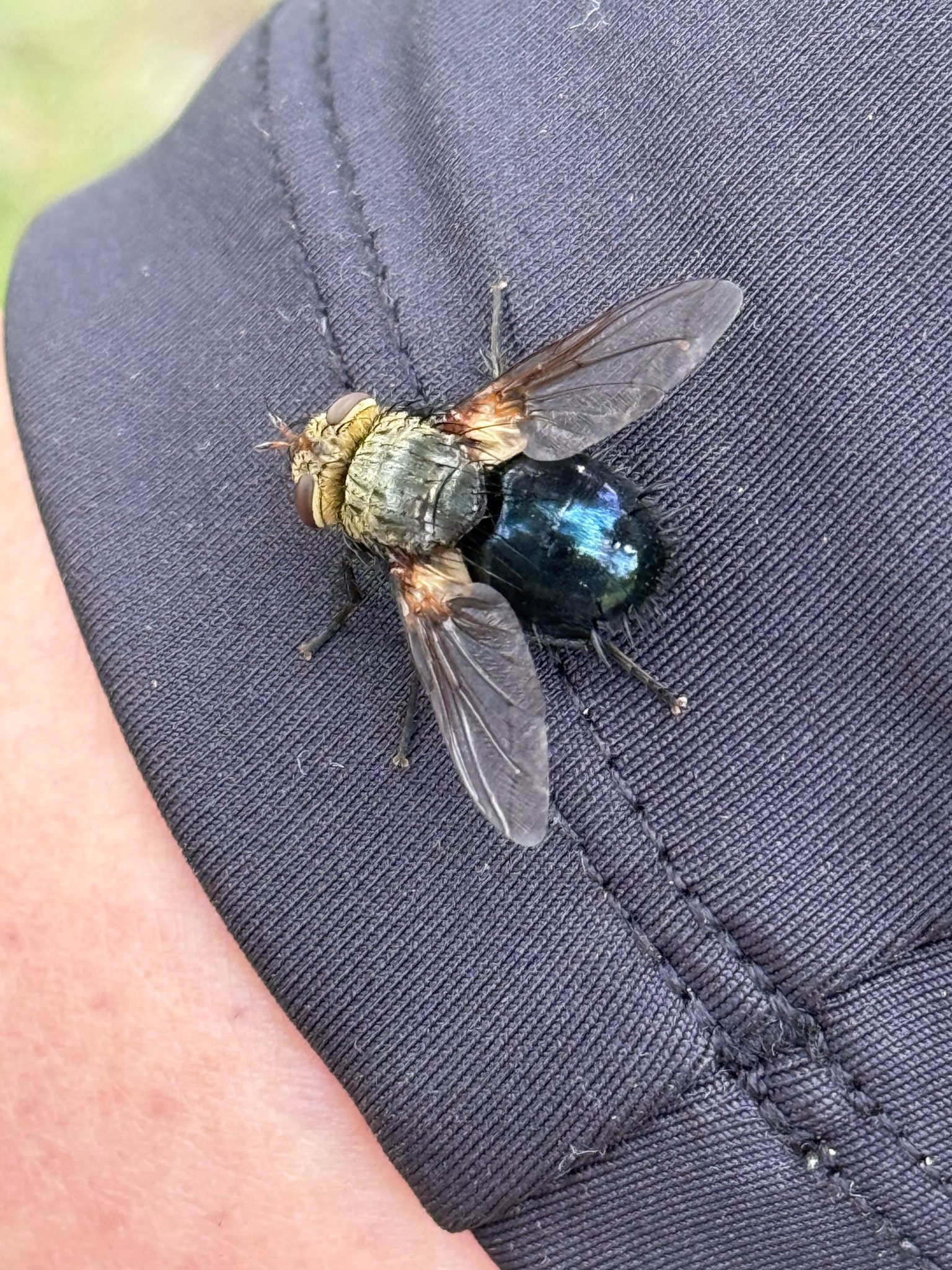
Community identification
Tachinid Fly (specifically of the genus Adejeania)
Adejeania vexatrix
- Order & Family
- Diptera: Tachinidae
- Size
- 10 to 15 mm in length
Natural Habitat
High-altitude meadows, forests, and subalpine zones, primarily in the Western United States and Mexico.
Diet & Feeding
Adults feed on nectar from flowers like goldenrods and asters. Larvae are internal parasites of caterpillars (moth larvae).
Behavior Patterns
Adults are active during the day and are often seen visiting flowers. Females lay eggs on host caterpillars or on vegetation where host larvae feed; the hatched larvae سپس burrow into the host to consume it from the inside out.
Risks & Benefits
Harmless to humans as they do not bite or sting. They are highly beneficial to ecosystems as pollinators and as natural biological control agents that help manage caterpillar populations.