
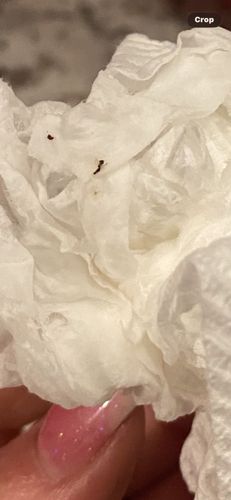
Community identification
Pharaoh Ant
Monomorium pharaonis
- Order & Family
- Order: Hymenoptera, Family: Formicidae
- Size
- Approximately 1.5 to 2.0 mm (very small)
Natural Habitat
Typically found indoors in climate-controlled buildings, often nesting in wall voids, behind baseboards, or near moisture sources like kitchens and bathrooms.
Diet & Feeding
Omnivorous; they consume a wide range of foods including sweets, fats, proteins, and other insects.
Behavior Patterns
They are known for 'budding,' where a portion of a colony relocates to start a new nest when disturbed. They are highly invasive and can form massive multi-queen colonies.
Risks & Benefits
Risks: They are significant pests in homes and hospitals because they can mechanically transmit pathogens such as Salmonella, Staphylococcus, and Streptococcus. Benefits: To humans, they have no significant benefits; in nature, they aid in decomposition and pest control of other small arthropods.