
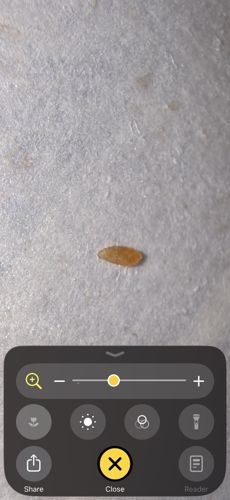
Community identification
Fruit fly pupa
Drosophila melanogaster
- Order & Family
- Order: Diptera; Family: Drosophilidae
- Size
- 3 mm to 4 mm in length
Natural Habitat
Typically found near fermenting organic matter, such as ripening fruits and vegetables, and in compost bins or trash cans.
Diet & Feeding
In the larval stage, they consume yeast and bacteria found in rotting or fermenting organic material; pupae do not eat.
Behavior Patterns
The pupa is a stationary life stage during which the insect transforms from a larva into an adult fly; this stage lasts about 4–5 days at room temperature.
Risks & Benefits
Generally considered a nuisance pest in homes; they do not bite, but can potentially spread bacteria from contaminated surfaces to food.