
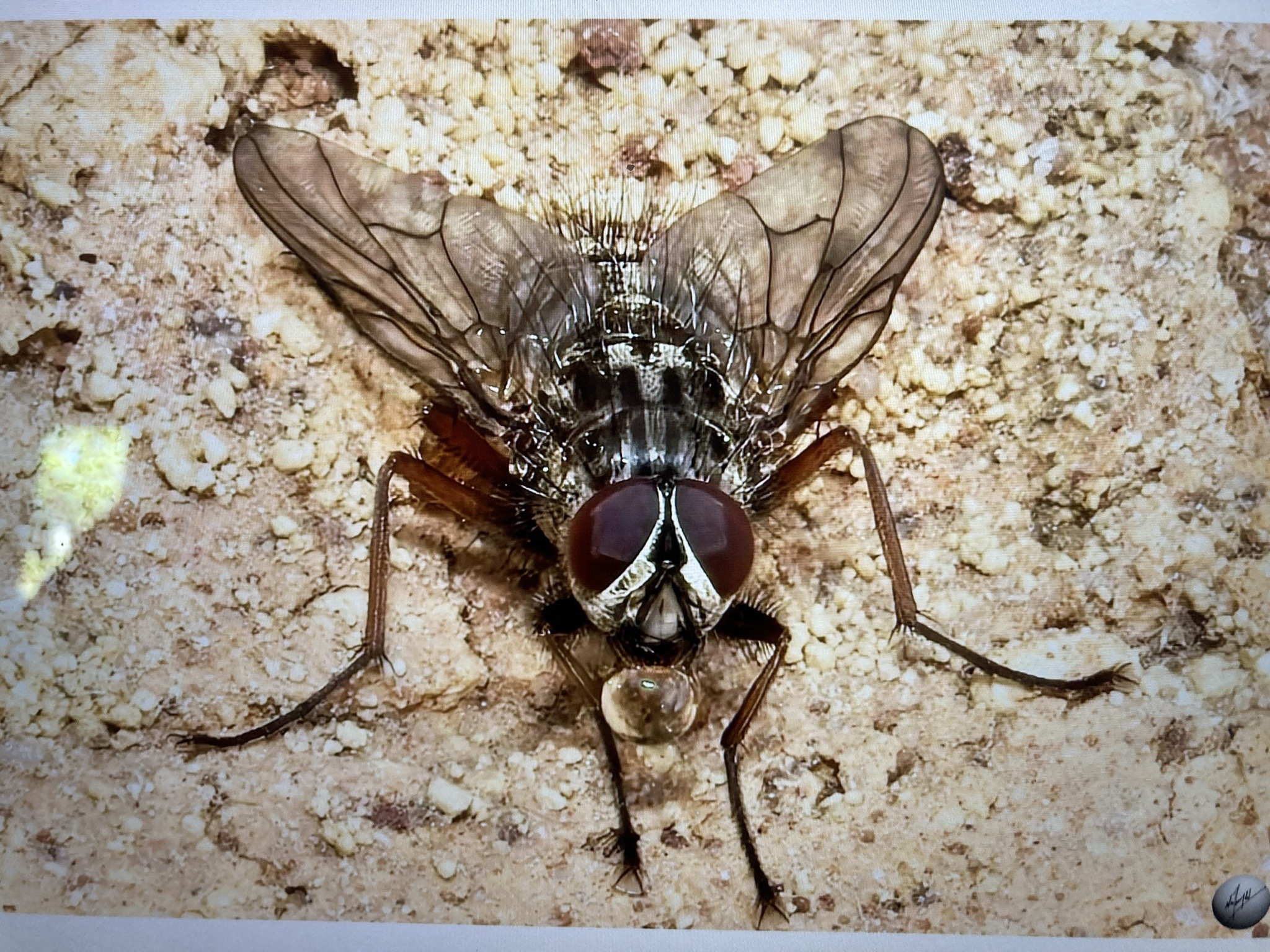
Community identification
House Fly
Musca domestica
- Order & Family
- Order Diptera, Family Muscidae
- Size
- 6–7 mm (0.24–0.28 in) in length
Natural Habitat
Global distribution; found wherever humans or domestic animals are present, particularly around decaying organic matter and garbage.
Diet & Feeding
Liquid or semi-liquid substances including rotting food, feces, and sugary liquids; they use "sponging" mouthparts and secrete saliva to dissolve solid food.
Behavior Patterns
Active during the day; known for resting on ceilings and walls at night. Their life cycle involves rapid complete metamorphosis (egg, larva, pupa, adult) often taking only 7-10 days in warm weather.
Risks & Benefits
Significant risk as carriers of over 100 pathogens (cholera, typhoid, etc.); benefits include acting as decomposers and providing a food source for many animals including birds and spiders.