
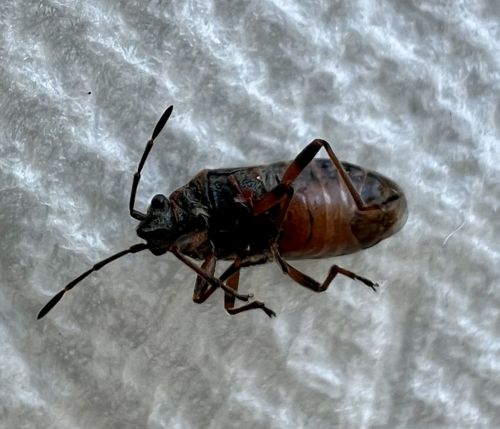
Boxelder Bug
Boisea trivittata
- Order & Family
- Order: Hemiptera, Family: Rhopalidae
- Size
- Approximately 1/2 inch (12-14 mm) in length.
Natural Habitat
Commonly found in areas where their host trees (boxelder, ash, maple) are present, including urban, suburban, and rural environments. In fall, they seek sheltered locations such as cracks in foundations, walls, and attics of homes for overwintering.
Diet & Feeding
Primarily feed on the sap of boxelder trees, as well as ash and maple trees, using their piercing-sucking mouthparts. They can occasionally feed on fruits and seeds.
Behavior Patterns
Boxelder bugs are known for congregating on the sunny sides of buildings in the fall as they seek overwintering sites. They often invade homes in large numbers, though they do not reproduce indoors. They are generally slow-moving. In spring, they emerge from overwintering and seek out host trees to lay eggs.
Risks & Benefits
Potential risks include being a nuisance pest when they enter homes in large numbers, staining curtains or walls with their excrement if crushed, and occasionally biting (though rare and usually harmless). They are not known to transmit diseases or cause significant structural damage. Generally, they provide little direct benefit to ecosystems beyond being part of the food chain for other insects or birds.