
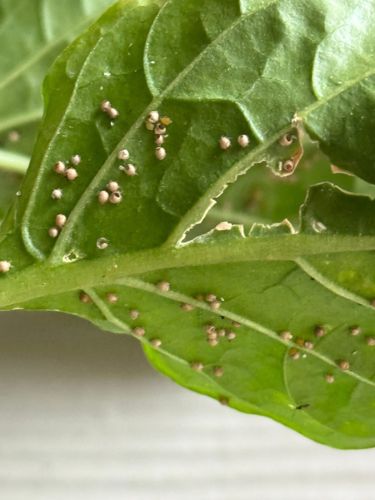
Community identification
Aphid Mummies
Aphidius colemani (parasitic wasp pupae)
- Order & Family
- Hymenoptera, Braconidae
- Size
- 1 - 3 mm in length
Natural Habitat
Agricultural fields, gardens, and greenhouses where aphid colonies are present.
Diet & Feeding
Larvae develop by consuming the internal organs of a live aphid; adults feed on nectar and honeydew.
Behavior Patterns
A female wasp lays an egg inside a living aphid. The larva eats the host from the inside, causing the aphid to swell and turn beige/tan (the mummy). The larva then pupates inside this shell before emerging as an adult through a circular exit hole.
Risks & Benefits
Highly beneficial to the ecosystem and gardeners as they provide natural biological pest control, significantly reducing aphid populations without the need for chemical pesticides.