
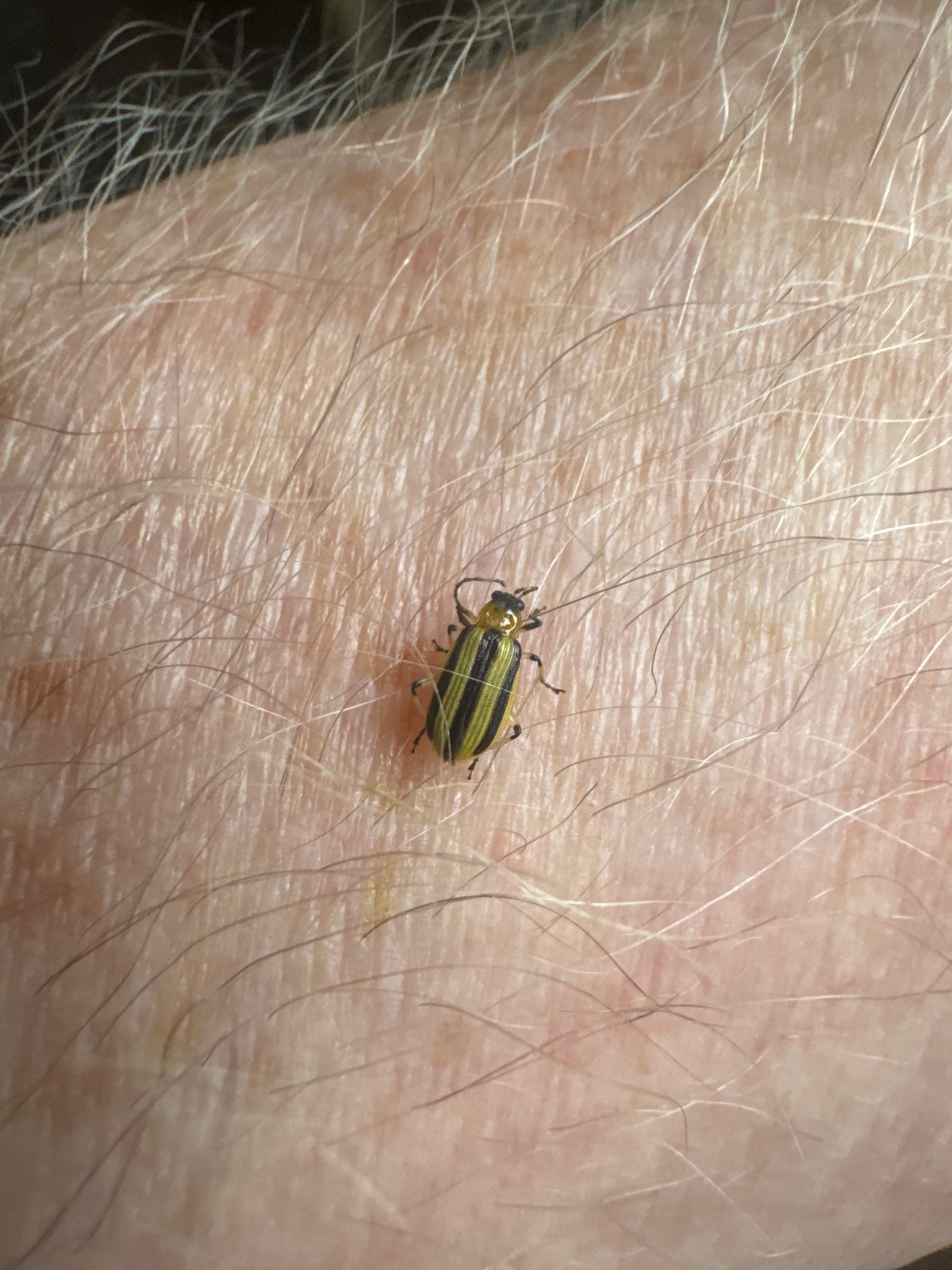
Community identification
Western Striped Cucumber Beetle
Acalymma trivittatum
- Order & Family
- Coleoptera: Chrysomelidae
- Size
- 5 to 6 mm (about 0.2 inches) in length
Natural Habitat
Agricultural fields, vegetable gardens, meadows, and areas where cucurbits (squash, melons, cucumbers) grow
Diet & Feeding
Herbivorous; adults feed on the leaves, stems, blossoms, and fruits of cucurbits (cucumbers, melons, squashes, pumpkins), while larvae feed on plant roots.
Behavior Patterns
Adults overwinter in plant debris or soil and emerge in spring to feed and lay eggs near the base of host plants. They are active fliers and can cause severe defoliation during peak populations.
Risks & Benefits
Risks: Significant agricultural and garden pest that defoliates crops and vectors bacterial wilt (Erwinia tracheiphila) and squash mosaic virus. Benefits: Serves as a food source for natural predators like lady beetles, lacewings, and parasitoid flies.