
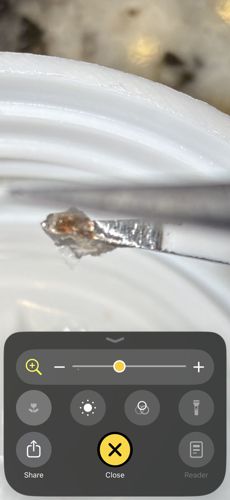
Community identification
Bird scavenger midge (or similar non-biting midge)
Forcipomyiinae (possibly Forcipomyia sp.)
- Order & Family
- Order: Diptera; Family: Ceratopogonidae
- Size
- 1 to 3 mm in length
Natural Habitat
Damp environments, including moist soil, rotting vegetation, or near bodies of water with organic debris.
Diet & Feeding
Larvae typically feed on fungi, algae, or decaying organic matter. Adults may feed on nectar or, in some species, act as ectoparasites on other larger insects.
Behavior Patterns
Often found in large swarms near moisture; they go through a complete metamorphosis (egg, larva, pupa, adult). They are particularly active during dawn and dusk.
Risks & Benefits
Generally harmless to humans. While some members of this family are 'no-see-ums' that bite, many subfamily members do not. They are beneficial as decomposers and as a food source for larger predators.