
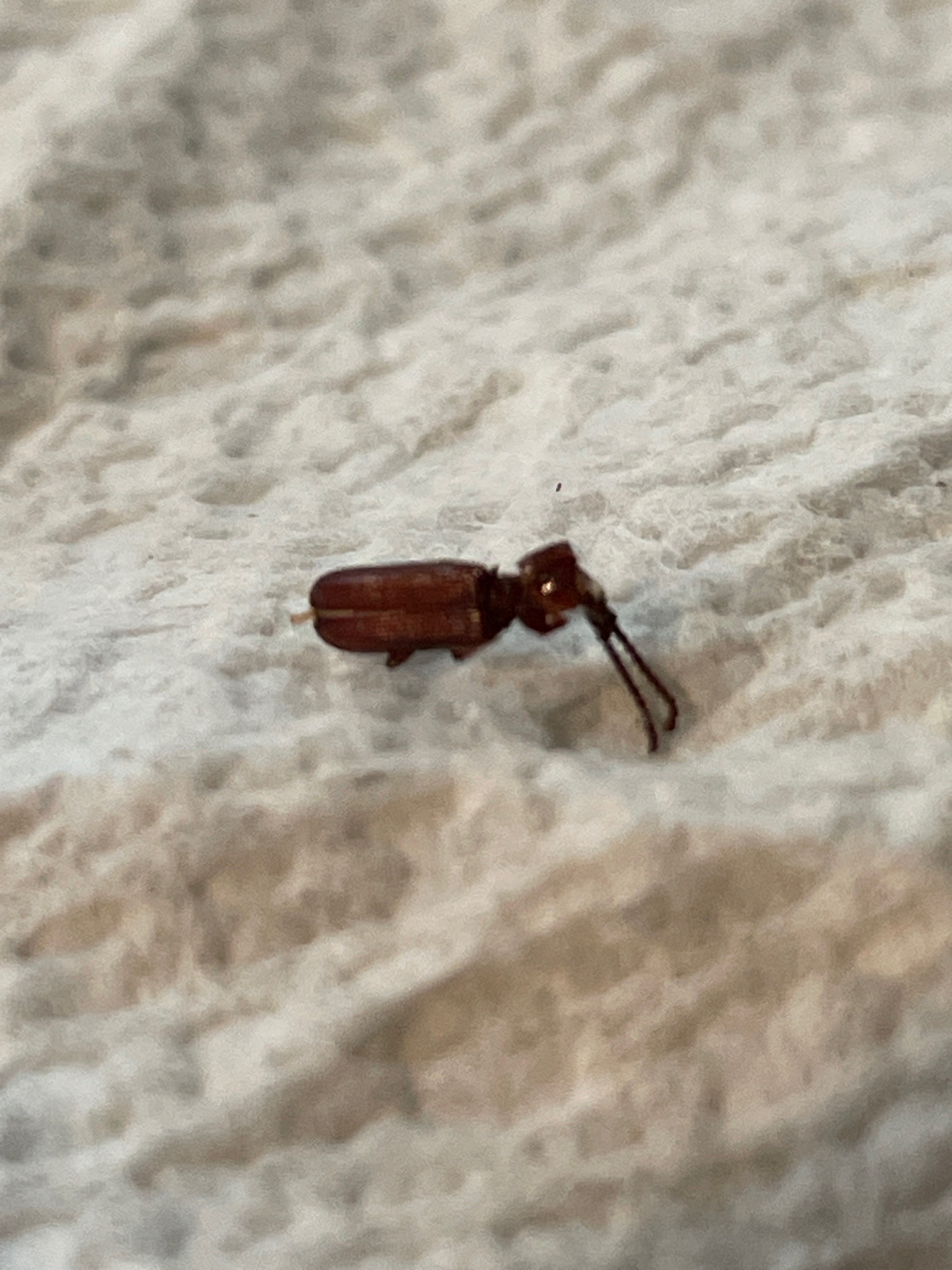
Community identification
Oak Timberworm Beetle
Arrhenodes minutus
- Order & Family
- Coleoptera: Brentidae
- Size
- 7 mm to 25 mm (males usually larger)
Natural Habitat
Deciduous forests, specifically associated with dying or recently felled oak, beech, and poplar trees.
Diet & Feeding
Adults feed on tree sap and fungi; larvae bore into wood to feed on sapwood and heartwood.
Behavior Patterns
Sexual dimorphism is extreme; males have elongated snout-like mouthparts used for fighting other males, while females have thin, needle-like snouts for drilling holes to lay eggs. They are typically active from late spring through summer.
Risks & Benefits
They are considered a minor forestry pest because they can degrade the quality of hardwood timber by creating 'wormholes,' but they pose no risk to humans or pets.