
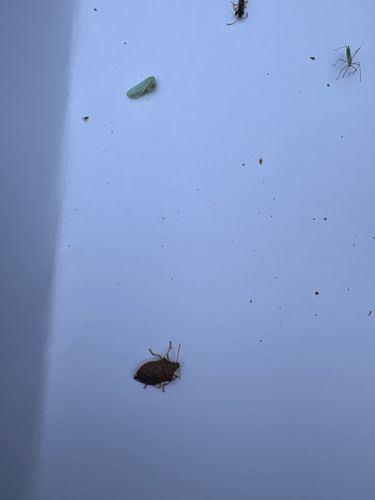
Brown Marmorated Stink Bug
Halyomorpha halys
- Order & Family
- Order: Hemiptera, Family: Pentatomidae
- Size
- Adults typically measure about 1.2 to 1.7 cm (0.5 to 0.7 inches) in length.
Natural Habitat
Native to East Asia, the brown marmorated stink bug has become an invasive species in North America and Europe. They are commonly found in agricultural fields, orchards, gardens, and forested areas. In cooler months, they seek shelter in homes and other structures to overwinter.
Diet & Feeding
Stink bugs are primarily herbivorous, feeding on a wide variety of plants, including fruits (apples, peaches, berries), vegetables (tomatoes, peppers, corn), field crops (soybeans, corn), and ornamental plants. They insert their proboscis into the plant tissue to suck out juices.
Behavior Patterns
Stink bugs are known for their defensive mechanism of releasing a foul-smelling liquid when threatened or crushed. They are often found on host plants where they feed. Adults may overwinter in sheltered locations, sometimes entering homes in large numbers. They are rather slow-moving insects and are strong fliers once airborne.
Risks & Benefits
Risks: Brown marmorated stink bugs are significant agricultural pests due to their broad host range and destructive feeding habits, causing significant damage to crops and resulting in economic losses. They are also considered nuisance pests when they invade homes in large numbers, though they do not typically bite humans or cause structural damage. Benefits: In their native range, they are part of the ecosystem as a food source for some predators and parasites, but these natural controls are often absent in invaded regions.