
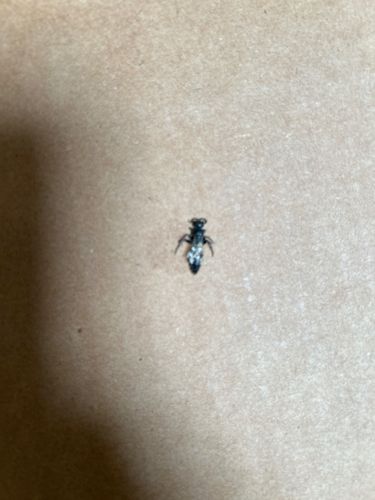
Fruit Fly (likely Drosophilidae family, but some hoverflies can also look similar)
Drosophila spp. (e.g., Drosophila melanogaster), though a definitive species identification from the image is not possible.
- Order & Family
- Order: Diptera, Family: Drosophilidae
- Size
- Typically 2-4 mm (0.08-0.16 inches) in length.
Natural Habitat
Widely distributed globally, often found near decaying organic matter, ripe fruits, vegetables, and fermenting liquids. Some species are associated with specific host plants.
Diet & Feeding
Larvae of fruit flies feed on decaying fruit, vegetables, and other organic matter. Some species are plant pests, feeding on living plant tissues. Adults commonly feed on nectar and decaying fruit juices.
Behavior Patterns
As larvae, they are legless grubs that live within the host plant, feeding on plant tissues. Adults are typically short-lived and primarily focus on reproduction. Many species are day-flying, visiting flowers for nectar.
Risks & Benefits
Potential risks include being a nuisance pest in homes and commercial settings, contaminating food with their larvae, and some species are significant agricultural pests. Benefits include their use as genetic research models (Drosophila melanogaster) and their role in decomposition.