
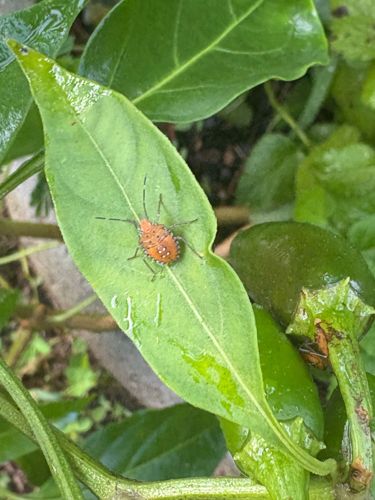
Stink Bug Nymph (likely early instar)
Varies by species (e.g., Halyomorpha halys for Brown Marmorated Stink Bug, Nezara viridula for Green Stink Bug). Identifying the exact species from a nymph stage can be challenging without further examination.
- Order & Family
- Order: Hemiptera, Family: Pentatomidae
- Size
- Nymphs vary in size depending on their instar, typically ranging from a few millimeters (early instars, like the one pictured) up to 10-15 mm as they approach maturity. Adult stink bugs usually range from 10-17 mm in length, depending on the species.
Natural Habitat
Stink bugs are found in a wide range of habitats, particularly in agricultural fields, gardens, orchards, and wooded areas where host plants are abundant. Nymphs and adults are commonly found on the leaves, stems, and fruits of their host plants.
Diet & Feeding
Stink bugs are typically polyphagous, meaning they feed on a wide variety of plants. They use their piercing-sucking mouthparts to feed on plant sap, fruits, seeds, and vegetables. Damage can include distorted fruits, "cat-facing" on peaches, discolored spots on various produce, and deformed seeds.
Behavior Patterns
Stink bugs undergo incomplete metamorphosis, meaning they hatch from eggs as nymphs (immature forms) that resemble smaller, wingless adults. They typically go through 5 nymphal instars before reaching adulthood. Nymphs often aggregate, especially in early instars. Adults may overwinter in sheltered locations and become active in spring. When disturbed, they can emit a foul-smelling liquid as a defense mechanism.
Risks & Benefits
Risks: Stink bugs are considered significant agricultural pests. Their feeding can cause substantial damage to various crops, including fruits, vegetables, and field crops (e.g., corn, soybeans), leading to economic losses for farmers. They can also become a nuisance pest in homes when they seek overwintering sites, though they do not cause structural damage or pose a health threat to humans. Benefits: In some ecosystems, certain stink bug species may act as predators of other insects, but the majority of agricultural pest species are herbivorous.