
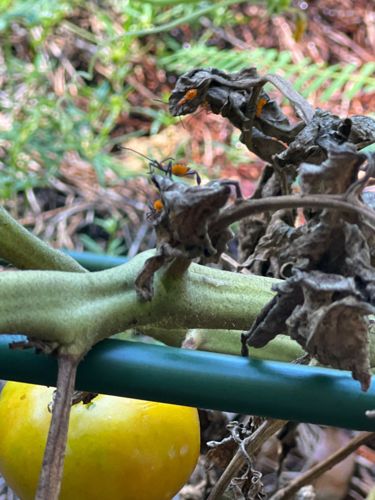
Leaf-footed Bug nymphs
Leptoglossus species (likely Leptoglossus phyllopus or a related species)
- Order & Family
- Order: Hemiptera, Family: Coreidae
- Size
- Nymphs vary in size, growing from a few millimeters (first instar) to about 1-1.5 cm (last instar). Adults typically range from 1.5-2 cm (0.6-0.8 inches) in length.
Natural Habitat
Gardens, agricultural fields, orchards, and areas with their host plants. They are typically found on the stems, leaves, and fruits of their preferred plants.
Diet & Feeding
Herbivorous. They feed on a wide variety of plants, including fruits, vegetables, nuts, and ornamental plants. They particularly prefer plants with developing seeds or fruits, such as tomatoes, squash, pecans, and citrus. They pierce the plant tissue and suck out the sap.
Behavior Patterns
Leaf-footed bug nymphs are often found in aggregations, especially during their early instars, as seen in the image. They use their piercing-sucking mouthparts to feed on plant sap. As they mature, they become more mobile. Adults are strong flyers. They are typically active during the day. Females lay barrel-shaped eggs, usually in rows or clusters, on plant stems or leaves.
Risks & Benefits
Risks: Leaf-footed bugs are considered significant agricultural pests. Their feeding can cause wilting, distortion, and dropping of fruits and seeds. On tomatoes, their feeding can lead to white, discolored areas or hard spots on the fruit, making them unmarketable. They can cause substantial economic losses for farmers and gardeners. Benefits: None significant for humans, as they are primarily pests. In the ecosystem, they serve as a food source for some predators and parasites, but their destructive nature to crops outweighs any perceived benefit from a human perspective.