
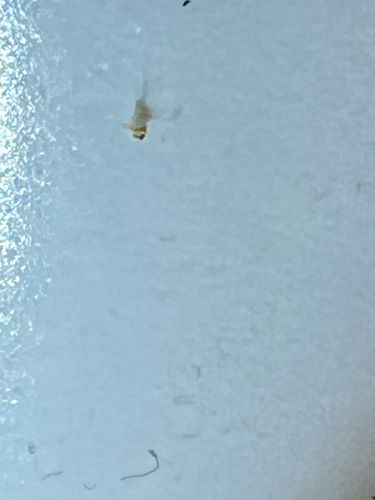
Community identification
Pharaoh Ant
Monomorium pharaonis
- Order & Family
- Hymenoptera, Formicidae
- Size
- Workers are very small, approximately 1.5 to 2 mm in length.
Natural Habitat
Widely distributed in indoor environments, specifically nesting in wall voids, under floorboards, or behind baseboards in heated buildings.
Diet & Feeding
Opportunistic omnivores; they feed on proteins, fats, and sugary liquids. Inside homes, they are attracted to syrups, jellies, and crumbs.
Behavior Patterns
They form large, multi-queen colonies and are known for 'budding,' where a group leaves to start a new colony if the original group is threatened. They are primarily nocturnal or active in dim light.
Risks & Benefits
Significant nuisance pest that can contaminate food; in healthcare settings, they are serious risks as they can mechanical vector pathogens like Salmonella and Streptococcus. They offer no notable benefits to indoor human ecosystems.