
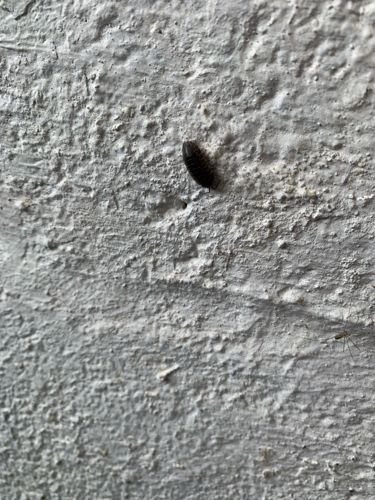
Pill Bug / Roly-poly
Armadillidium vulgare (Common Pill Bug is a well-known species)
- Order & Family
- Order Isopoda, Family Armadillidiidae (for commonly found pill bugs like Armadillidium vulgare)
- Size
- Typically 6 to 18 mm (0.24 to 0.71 inches) in length.
Natural Habitat
Pill bugs thrive in moist, dark environments. They are commonly found under rocks, logs, leaf litter, mulch, potted plants, and other debris in gardens and wooded areas. Indoors, they may be found in damp basements, crawl spaces, or bathrooms, especially if there are leaks or high humidity.
Diet & Feeding
Pill bugs are detritivores, meaning they feed on decaying organic matter. Their diet includes rotting wood, leaves, fungi, and other decomposing plant material. They also consume their own feces (coprophagy) to reabsorb copper, which is essential for their hemocyanin-based blood.
Behavior Patterns
Pill bugs are primarily nocturnal. When disturbed, they often roll into a tight ball as a defense mechanism, resembling a pill or bead. This behavior protects their softer undersides from predators. They prefer damp environments and move slowly, exploring their surroundings, often in groups. They are detritivores, playing a role in decomposition.
Risks & Benefits
Pill bugs are generally harmless to humans and do not bite or sting. They are not known to transmit diseases. While they can sometimes be a nuisance if found indoors in large numbers, they typically do not cause structural damage. In gardens, they can sometimes cause minor damage to seedlings or soft fruits if other food sources are scarce, but this is usually not significant. Their primary benefit lies in their role as decomposers, breaking down dead plant material and returning nutrients to the soil, which enriches the ecosystem.