
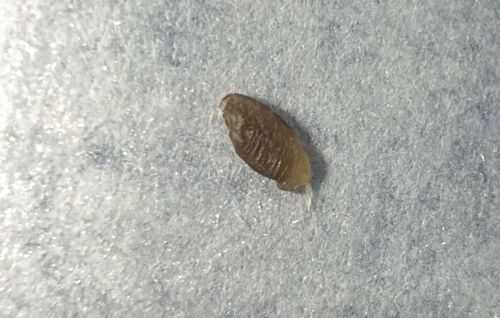
Community identification
Ant Pupa (likely Tetramorium or Lasius species)
Formicidae (Family)
- Order & Family
- Order: Hymenoptera, Family: Formicidae
- Size
- Typically 2mm to 10mm, varying greatly by species and caste (worker vs. queen). This specimen appears quite small, likely typically 3-5mm.
Natural Habitat
Ant nests located underground, in dead wood, under rocks, or inside structures. Occasionally found outside the nest if the colony is moving or has been disturbed.
Diet & Feeding
Does not eat. The pupal stage is a non-feeding transformation phase where the larva reorganizes into the adult ant form.
Behavior Patterns
Immobile and helpless; relies entirely on adult worker ants for protection, moving, and grooming. Encased in a silken cocoon in some subfamilies (like Formicinae), or naked (like Myrmicinae) as seen here.
Risks & Benefits
Benefits: Indicates a developing colony which aerates soil and controls other pests. Risks: No direct risk in this form, but signals the presence of a nearby ant colony which could be a structural pest.