
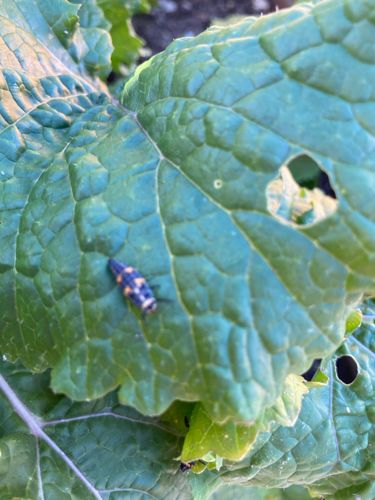
Ladybug Larva (specifically, likely a Harlequin/Asian Lady Beetle or a similar species)
Coccinellidae (Larva) - exact species cannot be determined without adult form, but some common ones include Harmonia axyridis or Hippodamia convergens.
- Order & Family
- Order: Coleoptera, Family: Coccinellidae
- Size
- Typically 4-18 mm (0.16-0.7 inches) depending on the species and stage of larval development.
Natural Habitat
Gardens, agricultural fields, meadows, and any areas with plants that host their prey (aphids, etc.). They are often found on the undersides of leaves where their prey congregate.
Diet & Feeding
Primarily soft-bodied insects, especially aphids, scale insects, and other small pest insects that feed on plants. They are significant biological control agents.
Behavior Patterns
Ladybug larvae are predatory and active hunters. They undergo complete metamorphosis, meaning they pass through four life stages: egg, larva, pupa, and adult. The larval stage is dedicated to feeding and growing before pupating. They can often be found voraciously consuming aphids.
Risks & Benefits
Benefits: Ladybug larvae are highly beneficial insects known for their significant role in pest control, particularly of aphids. They consume large numbers of agricultural and garden pests, reducing the need for chemical pesticides. Risks: Some invasive species, like Harmonia axyridis (the Harlequin/Asian Lady Beetle), can be a nuisance in autumn when they seek shelter indoors, and they can bite, although not medically significant. They also compete with native ladybug species. However, overall, their predatory nature is largely beneficial.