
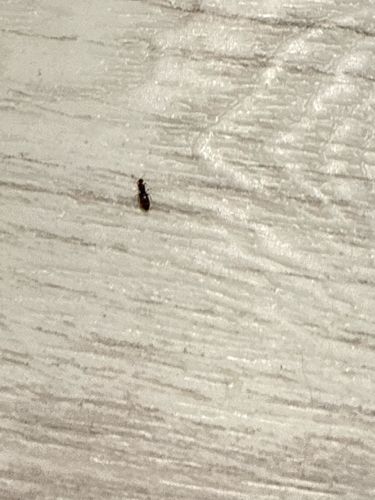
Red Flour Beetle
Tribolium castaneum
- Order & Family
- Order: Coleoptera, Family: Tenebrionidae
- Size
- Approximately 2.5-4.5 mm (0.10-0.18 inches) in length.
Natural Habitat
Found globally in temperate and tropical regions, primarily associated with stored food products in homes, grocery stores, mills, and warehouses. They thrive in warm, humid conditions.
Diet & Feeding
The red flour beetle is a scavenger and feeds on a wide variety of dried food products, especially milled grain products like flour, cereal, pasta, and pet food. They are unable to feed on whole, unbroken grains.
Behavior Patterns
Flour beetles are highly active, especially in warm conditions, and will often wander. They are known to infest pantries, warehouses, and other food storage areas. Females lay eggs directly in food sources. The life cycle from egg to adult can be as short as 20 days in optimal conditions (warm and humid). They are often found aggregated in food sources, particularly those that are undisturbed for long periods.
Risks & Benefits
Risks: Major stored product pests, causing significant economic damage by contaminating food with their presence, fecal matter, and secretions that can impart an unpleasant odor and taste. They can also cause allergic reactions in sensitive individuals. Benefits: No direct benefits to humans or the ecosystem are commonly attributed to red flour beetles, especially given their pest status.