
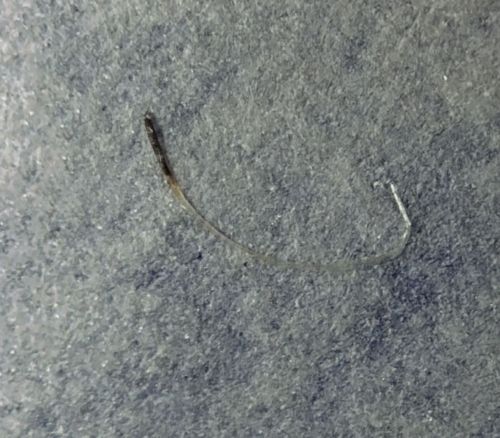
Flea Larva
Ctenocephalides felis (most common) or Ctenocephalides canis
- Order & Family
- Order: Siphonaptera, Family: Pulicidae
- Size
- 2 to 5 millimeters in length
Natural Habitat
Dark, sheltered environments such as deep carpet fibers, pet bedding, crevices in floorboards, and upholstery. They generally avoid light.
Diet & Feeding
Organic debris, dead insects, vegetable matter, and crucially 'flea dirt' (dried blood feces excreted by adult fleas), which appears as the dark reddish-black color inside the larva's gut.
Behavior Patterns
They are negatively phototactic (actively move away from light) and crawl deeply into substrates to hide. After going through three larval stages, they spin a sticky silken cocoon to pupate.
Risks & Benefits
Risk: Their presence confirms an active flea infestation in the home. While larvae do not bite, they mature into adult fleas that bite humans and pets, causing allergic dermatitis, anemia in small animals, and potentially transmitting tapeworms or diseases.