
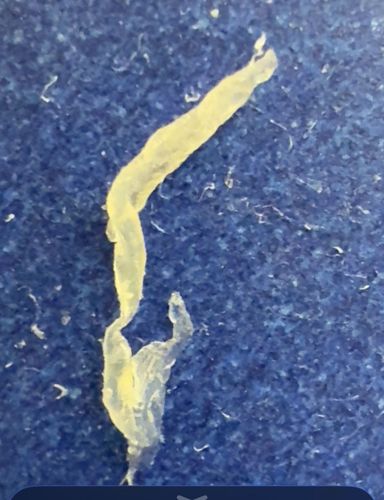
Community identification
Tapeworm (likely a segment or Proglottid from a Dipylidium caninum)
Dipylidium caninum (most likely candidate based on appearance)
- Order & Family
- Order: Cyclophyllidea, Family: Dipylidiidae
- Size
- Segments are typically resembling a grain of rice or cucumber seed (approx. 5-10mm long). Full adult worms can reach 15-70cm.
Natural Habitat
Intestinal tract of mammals (primarily dogs and cats); larvae develop in fleas
Diet & Feeding
Absorbs nutrients directly through their skin (tegument) from the host's digestive contents; they lack a digestive system of their own.
Behavior Patterns
Parasitic lifecycle. Adults live in the intestines. Gravid proglottids (egg-filled sacs) detach and pass out via feces or crawl out of the anus, often wriggling around which causes itching. They dry out to look like sesame_seeds.
Risks & Benefits
Risks: Causes discomfort, anal itching (scooting), and mild gastrointestinal issues in pets. Zoonotic potential: humans (usually children) can become infected if they accidentally ingest an infected flea, though serious disease is rare.