
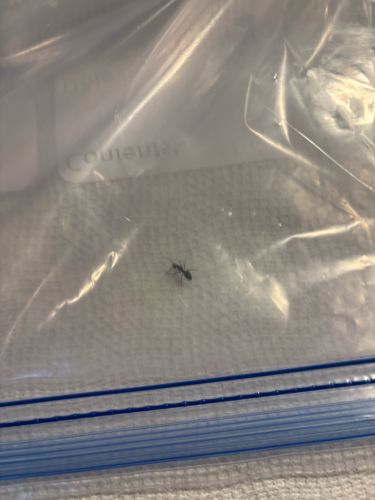
Ant
Formicidae (family, as specific genus/species cannot be identified from image)
- Order & Family
- Order: Hymenoptera, Family: Formicidae
- Size
- Typically 2 mm to 25 mm (0.08 to 1 inch), depending on the species and caste.
Natural Habitat
Ants are found in nearly all terrestrial habitats around the world, from forests and deserts to urban environments. They typically build nests in soil, under rocks, in wood, or even in structures.
Diet & Feeding
Ants are omnivorous, consuming a wide variety of foods including nectar, seeds, fungi, insects (both living and dead), and human food scraps. Their diet varies depending on the species and environmental conditions.
Behavior Patterns
Ants are social insects that live in colonies, which can range from a few dozen foraging individuals to highly organized colonies that may occupy large territories and consist of millions of individuals. They communicate using pheromones, touch, and chemical signals.
Risks & Benefits
Risks: Can be considered a nuisance pest when they invade homes or gardens. Some species can bite or sting, causing minor irritation or allergic reactions in sensitive individuals. Can contaminate food. Benefits: Play important roles in ecosystems by aerating soil, predating on other insects (including pests), and dispersing seeds. They are also scavengers, helping to clean up decaying matter.