
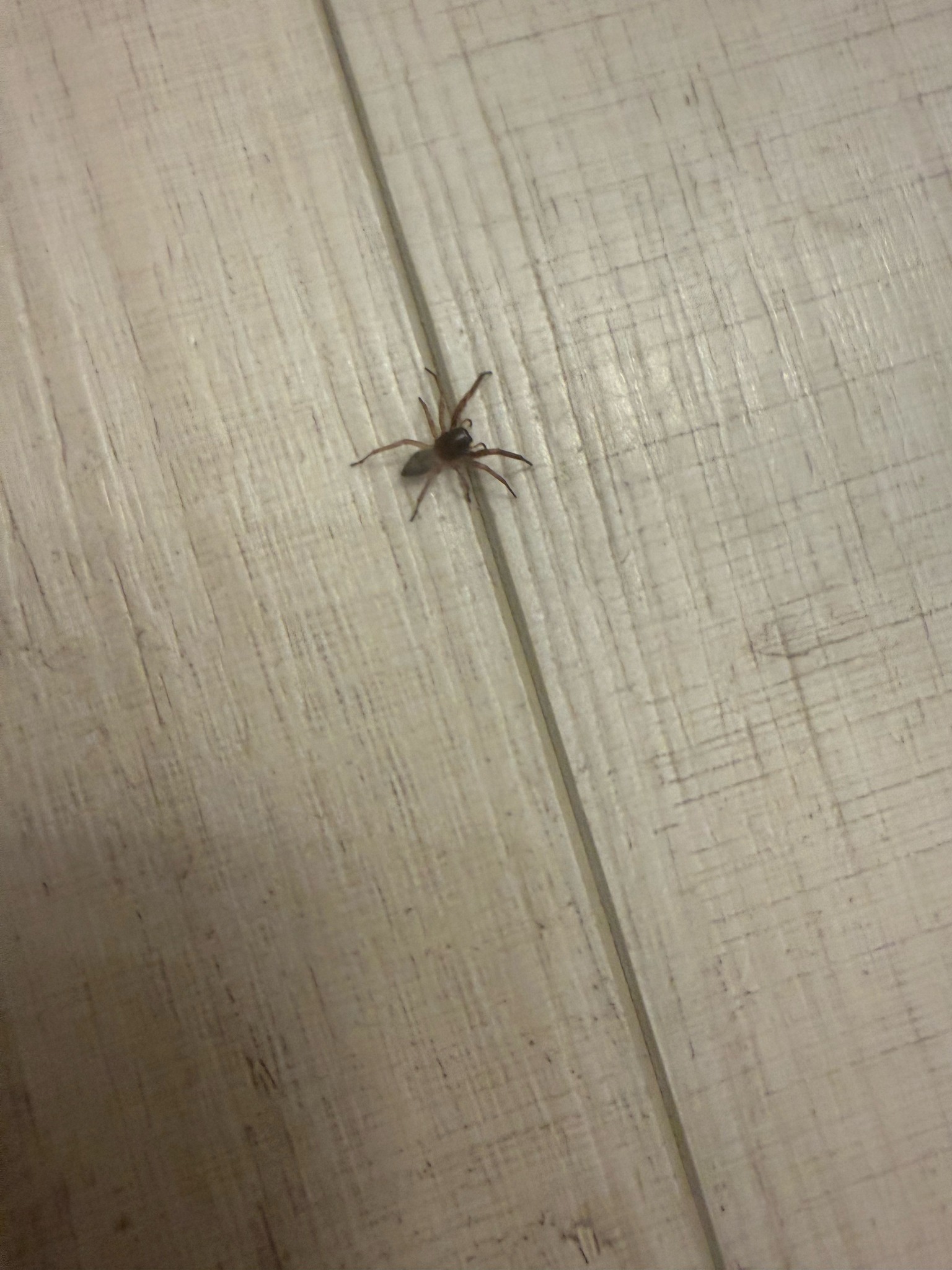
Community identification
Woodlouse Hunter
Dysdera crocata
- Order & Family
- Araneae, Dysderidae
- Size
- 11 - 15 mm (body length excluding legs)
Natural Habitat
Typically found in damp, dark areas under logs, rocks, or leaf litter; commonly enters homes in search of prey.
Diet & Feeding
Strictly carnivorous, primarily feeding on woodlice (sowbugs/pillbugs), using their large chelicerae to pierce hard exoskeletons.
Behavior Patterns
Nocturnal hunters that do not spin webs to catch prey. They utilize silk to create protective daytime retreats or hideaways during molting.
Risks & Benefits
Benefits the ecosystem by controlling crustacean and insect populations. They are not medically significant to humans, though their bite can be painful due to large fangs and may cause localized swelling or itching.