
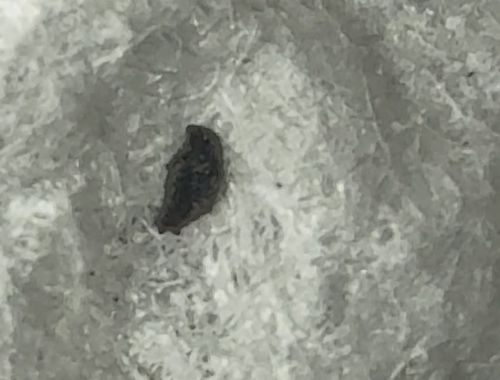
Case-bearing Clothes Moth Larva
Tinea pellionella
- Order & Family
- Order: Lepidoptera, Family: Tineidae
- Size
- Larval case is typically 6 mm to 10 mm (0.24 to 0.4 inches) in length.
Natural Habitat
Typically found indoors in closets, carpets, and areas where natural fabric, wool, fur, or felt items are stored. They prefer dark, undisturbed corners.
Diet & Feeding
They feed on keratin-rich animal fibers such as wool, fur, silk, feathers, felt, and human hair or lint found in dust.
Behavior Patterns
The larva constructs a silken case around its body which it carries with it as it moves (resembling a pumpkin seed or a piece of lint). It travels specifically to feed and will attach itself to a surface when ready to pupate.
Risks & Benefits
Risks: Significant household pest that causes damage to clothing, rugs, upholstery, and taxidermy by eating holes in fabrics. Benefits: In nature, they help break down animal remains, though this benefit is negligible in a domestic setting.