
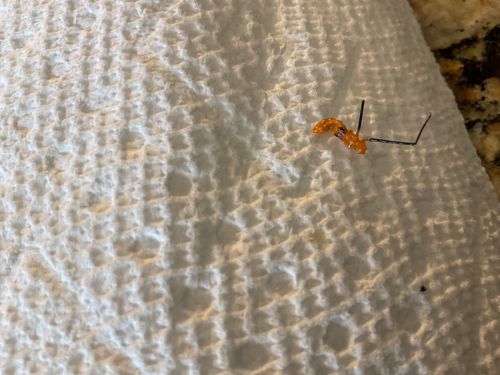
Glow-worm beetle (likely a female or larva thereof)
Various species within the family Lampyridae (e.g., Lampyris noctiluca in Europe, or species from genera like Phengodes or Phausis in North America if found there)
- Order & Family
- Order: Coleoptera, Family: Lampyridae
- Size
- Larvae can range from a few millimeters to several centimeters depending on the species. Adult females typically range from 1 to 2.5 cm. Adult males are often smaller, around 0.5 to 1.5 cm.
Natural Habitat
Typically found in moist, shaded areas, grasslands, forests, and gardens. Larvae are terrestrial and live in soil or under leaf litter. Adults often reside near larval habitats.
Diet & Feeding
Larvae of glow-worm beetles are predatory, primarily feeding on snails, slugs, and other small invertebrates. Adults of many species do not feed.
Behavior Patterns
Males and females are common. Males are smaller and more active. They are attracted to lights. They are often found in water and are most active at night. Their life cycle includes an egg, larval, pupal, and adult stage. Larvae develop in moist soil or decaying organic matter. They are known for their bioluminescence, which is used for mating signals.
Risks & Benefits
Generally beneficial as larvae prey on slugs and snails, which can be garden pests. They pose no direct risk to humans, as they do not bite or sting. Their bioluminescence is a fascinating natural phenomenon.