
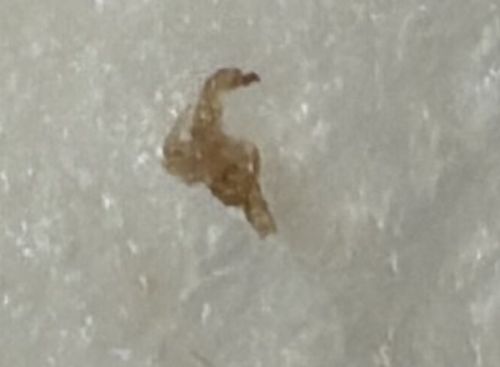
Body Louse (or Head Louse) - severely desiccated/damage specimen
Pediculus humanus humanus (or Pediculus humanus capitis)
- Order & Family
- Order: Psocodea (formerly Phthiraptera), Family: Pediculidae
- Size
- 2.5 to 3.5 millimeters in length (adults)
Natural Habitat
Exclusively on human hosts; body lice live in clothing and bedding, moving to skin to feed, while head lice live exclusively on the scalp and hair.
Diet & Feeding
Hematophagous (feed exclusively on human blood several times a day)
Behavior Patterns
They are obligate parasites that cling to hair or clothing fibers with claw-like legs. Body lice lay eggs (nits) in clothing seams, while head lice cement eggs to hair shafts. They cannot fly or jump, spreading instead through direct contact.
Risks & Benefits
Risks include intense itching (pruritus), secondary skin infections from scratching, and social stigma. Specifically, body lice are vectors for diseases like typhus, trench fever, and relapsing fever (head lice are not known to transmit disease).