
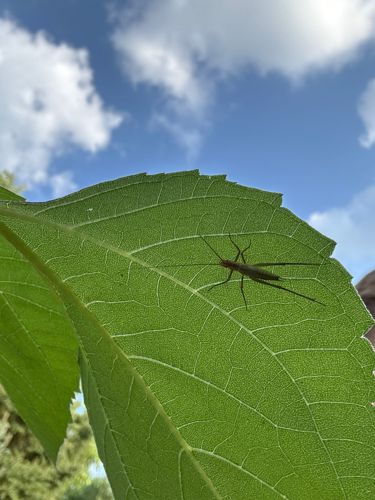
Katydid Nymph
Tettigoniidae (nymph)
- Order & Family
- Order: Orthoptera, Family: Tettigoniidae
- Size
- Nymphs vary in size depending on their instar (development stage), typically ranging from a few millimeters to several centimeters. Adults can range from 1 to 10 cm in body length, with some tropical species being much larger.
Natural Habitat
Forests, grasslands, meadows, gardens, and shrublands. They prefer areas with dense vegetation for camouflage and food sources.
Diet & Feeding
Primarily Herbivorous: Most katydid species feed on leaves, flowers, bark, and seeds. Some species are omnivorous, also consuming small insects.
Behavior Patterns
They are nocturnal and typically hide during the day, often camouflaged among vegetation. Males attract females by stridulation (rubbing body parts together) to produce sounds. Many species are flightless or poor fliers. They undergo incomplete metamorphosis, with nymphs resembling smaller versions of the adults.
Risks & Benefits
Risks: Can be minor agricultural pests in large numbers, damaging crops and garden plants. Benefits: Serve as a food source for birds, bats, and other insectivores, contributing to the food web. Some species may aid in pollination.