
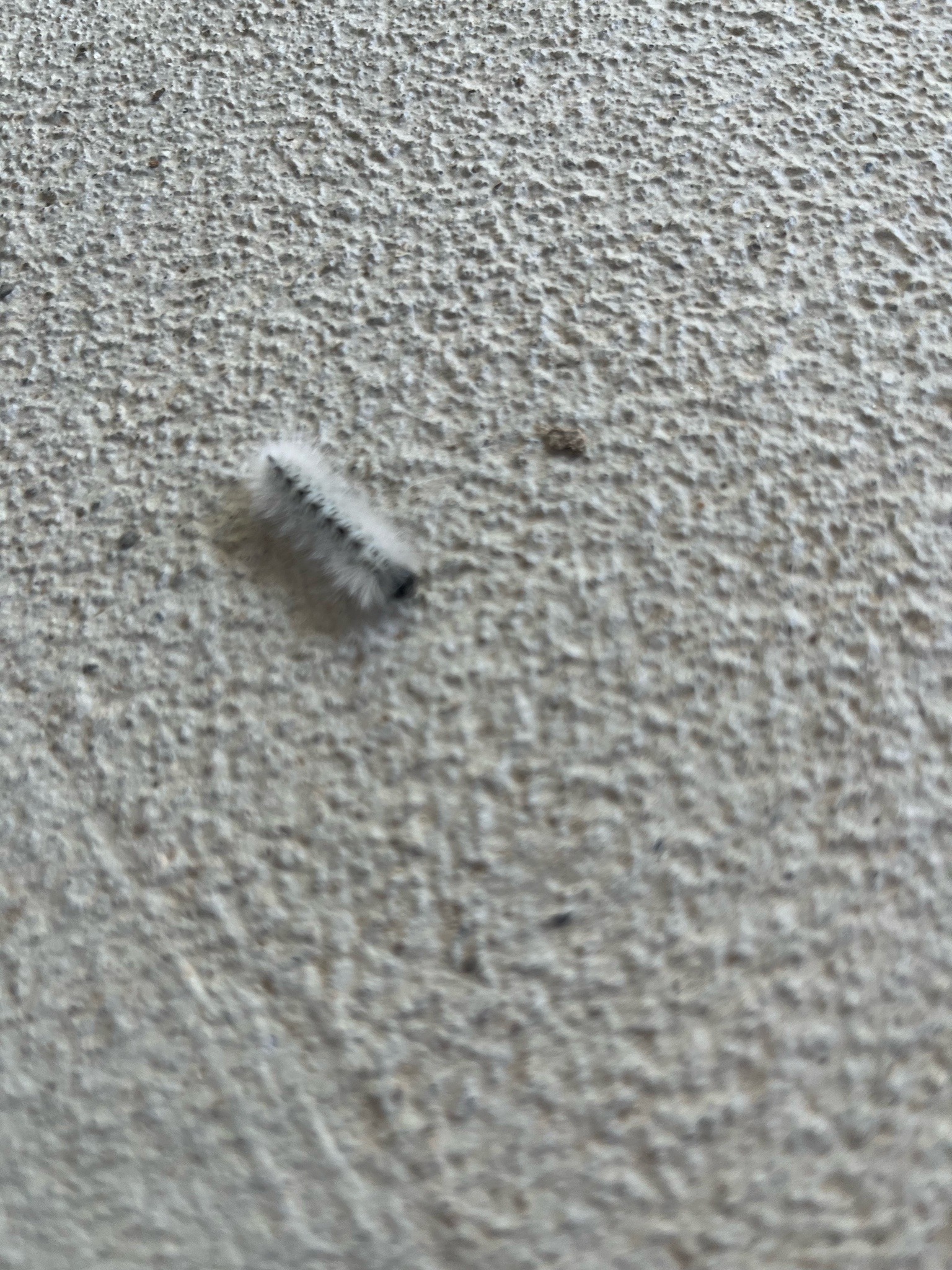
Hickory Tussock Moth Caterpillar
Lophocampa caryae
- Order & Family
- Order Lepidoptera, Family Erebidae
- Size
- Up to 45 mm (1.75 inches) in length
Natural Habitat
Deciduous forests and wooded areas throughout North America, particularly where hickory, walnut, ash, and elm trees are present.
Diet & Feeding
Herbivorous larva; feeds primarily on the leaves of hickory, walnut, pecan, American hornbeam, ash, elm, and oak trees.
Behavior Patterns
Early instars are gregarious, feeding in large groups on the undersides of leaves. As they mature, they become solitary and may be seen wandering on the ground or tree trunks in late summer and fall as they seek a location to spin a cocoon.
Risks & Benefits
The hairs (setae) on the caterpillar can cause skin irritation or a painful rash in humans if touched; they contain microscopic barbs and can cause allergic reactions. Ecologically, they serve as a food source for birds and play a role in forest nutrient cycling.