
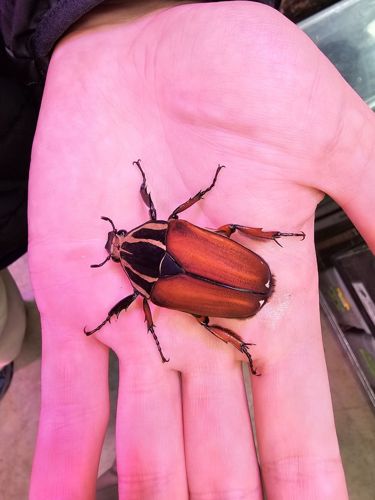
Goliath Beetle (likely a species from the subtribe Goliathina, possibly even a female Mecynorrhina torquata or similar, given the appearance and size relative to the hand)
Goliathus (genus) or Mecynorrhina (genus) - specific species is difficult to determine precisely from the image, but it certainly belongs to the Goliathini tribe of flower chafers.
- Order & Family
- Order: Coleoptera, Family: Scarabaeidae (Subfamily: Cetoniinae, Tribe: Goliathini)
- Size
- Typically large, ranging from 40 to over 100 mm (1.6 to 4 inches) in length, varying by species. The specimen shown in the image appears to be on the larger side, consistent with these measurements.
Natural Habitat
Tropical and subtropical forests, particularly in Africa where many large goliath beetle species reside. Larvae live underground.
Diet & Feeding
Adults typically feed on tree sap and fruits. Larvae feed on decaying wood and detritus in the soil, and sometimes on roots.
Behavior Patterns
Adults are nocturnal and are attracted to lights. Larvae live in the soil and feed on decaying wood or roots. Adults emit a foul-smelling liquid when threatened. Their flight is often clumsy due to their large size.
Risks & Benefits
Generally harmless to humans; they do not bite or sting. They can be beneficial in ecosystems as decomposers in their larval stage, breaking down decaying wood. Some species are considered pests in their larval stage if they feed on the roots of cultivated plants, but this is less common for the very large species often associated with decaying wood. They are popular among insect collectors.