
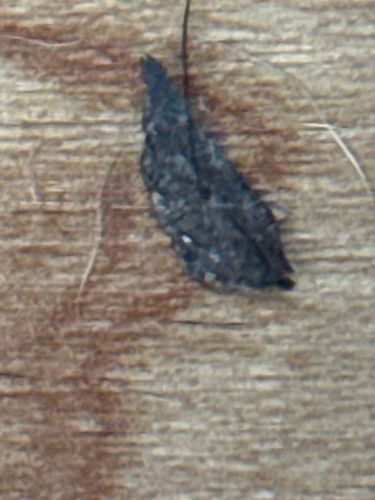
Household Casebearer, Plaster Bagworm, or Clothes Moth Larva
Phereoeca uterella (or other Tineidae species)
- Order & Family
- Lepidoptera, Tineidae
- Size
- Larval case typically 5-15 mm long. The larva inside is about 3-10 mm.
Natural Habitat
Indoors, especially in humid environments like bathrooms, closets, and attics. They are often found on rough surfaces like walls, ceilings, and in corners, making a protective case from silk and debris.
Diet & Feeding
Feeds on natural fibers (wool, silk, felt, fur, feathers), shed human and animal hair, spiderwebs, and sometimes pantry items. The larvae are scavengers.
Behavior Patterns
The larva constructs a distinctive, flat, spindle-shaped case from silk and surrounding debris (dust, lint, sand, plaster). It carries this case with it as it moves and feeds, only protruding its head and legs. When ready to pupate, it seals off the case. The adult moth is small and shy, not typically noticed.
Risks & Benefits
Potential risks include damage to natural fiber textiles (clothing, carpets, upholstery, furs) and stored goods. They are not known to transmit diseases or directly harm humans. They offer no significant benefits to humans or the ecosystem in household settings.