
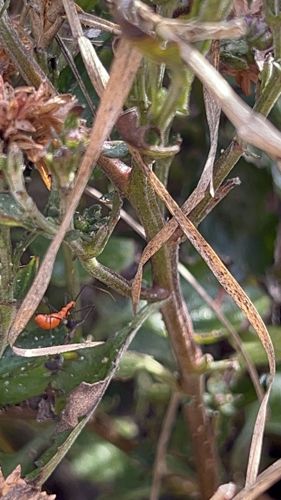
Reduviid Bug Nymph
Family Reduviidae (nymph)
- Order & Family
- Order Hemiptera, Family Reduviidae
- Size
- Nymphs typically range from a few millimeters up to 1-2 cm, depending on their instar and species.
Natural Habitat
Found in a variety of terrestrial habitats, including gardens, fields, forests, and shrubbery, often camouflaged among vegetation where they hunt prey.
Diet & Feeding
Predatory. Reduviid bug nymphs feed on other insects by ambushing them, piercing their bodies with a strong, needle-like rostrum, and injecting digestive enzymes to liquefy their prey's internal tissues, which they then suck out.
Behavior Patterns
Nymphs often resemble the adults in general form but lack fully developed wings. They undergo incomplete metamorphosis, molting several times to reach adulthood. They are solitary hunters, relying on camouflage and stealth to catch prey. Many species are nocturnal, while others are active during the day. The one in the image is a nymph based on its underdeveloped wings (or lack thereof) and overall appearance.
Risks & Benefits
Benefits: Reduviid bugs are beneficial predators in many ecosystems, helping to control populations of various pest insects, including caterpillars, plant bugs, and aphids. Risks: Some larger species (such as kissing bugs) can bite humans, and while most bites are not medically significant beyond a painful localized reaction, some species can transmit diseases (e.g., Chagas disease by Triatominae subfamily members). However, the specific species in the image cannot be identified to that level of detail, but most Reduviid bugs are not considered dangerous to humans. This particular nymph's bright orange coloration might be a warning or a form of mimicry.