
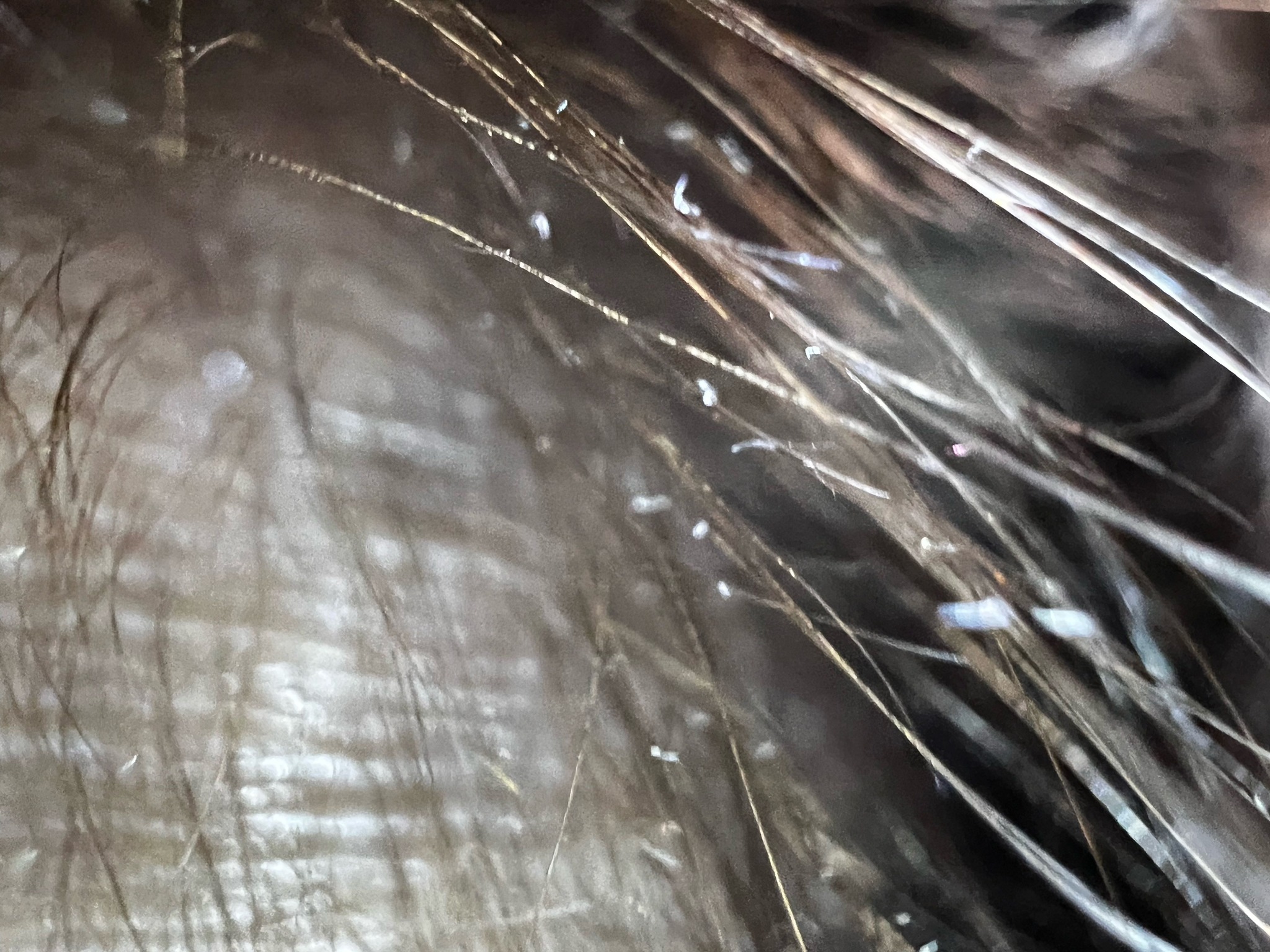
Community identification
Head louse (eggs known as nits)
Pediculus humanus capitis
- Order & Family
- Order: Psocodea; Family: Pediculidae
- Size
- Commonly 2-3 mm for adults; nits (eggs) are approximately 0.8 mm.
Natural Habitat
Exclusively the human scalp and hair, remaining close to the scalp for warmth.
Diet & Feeding
Obligate parasites that feed exclusively on human blood several times a day.
Behavior Patterns
They cannot fly or jump; they move by crawling. Eggs (nits) are cemented to the hair shaft. Life cycle includes egg, three nymphal stages, and adult.
Risks & Benefits
Cause intense itching and scalp irritation due to an allergic reaction to saliva. While they do not spread disease, secondary infections can occur from scratching. No ecological benefits to humans.