
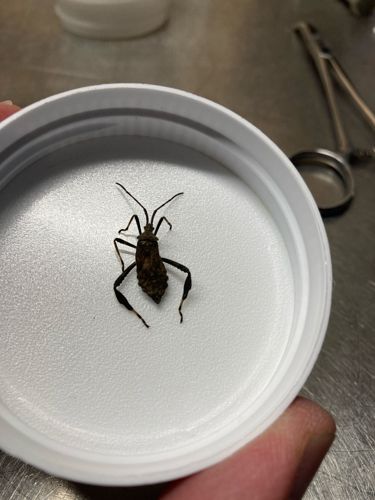
Leaf-footed Bug
Various genera within Coreidae, for example, Leptoglossus phyllopus (Eastern Leaf-footed Bug) is a common species that matches the appearance.
- Order & Family
- Order: Hemiptera, Family: Coreidae
- Size
- Typically range from 1 to 2 cm (0.4 to 0.8 inches) in length, though some species can be larger.
Natural Habitat
Leaf-footed bugs are found in a wide range of habitats, particularly those with abundant host plants. This includes gardens, agricultural fields, orchards, and natural areas where their preferred plant species grow.
Diet & Feeding
Mainly phytophagous (plant-feeding). They use their piercing-sucking mouthparts to feed on various parts of plants, including fruits, seeds, nuts, and stems. They can cause significant damage to crops like tomatoes, pecans, citrus, and various legumes.
Behavior Patterns
Leaf-footed bugs are generally active during the day. They are known for their ability to fly and will often produce a buzzing sound. When disturbed, they may emit an unpleasant odor as a defense mechanism. Adults overwinter in protected areas, such as under bark or in leaf litter, and emerge in spring to lay eggs on host plants. Nymphs often aggregate and feed together.
Risks & Benefits
Potential Risks: They are considered agricultural pests, causing damage to a variety of crops, leading to economic losses for farmers. Their feeding can cause fruit distortion, premature fruit drop, and susceptibility to secondary infections. Potential Benefits: In natural ecosystems, they serve as a food source for various predators like birds, spiders, and assassin bugs.