
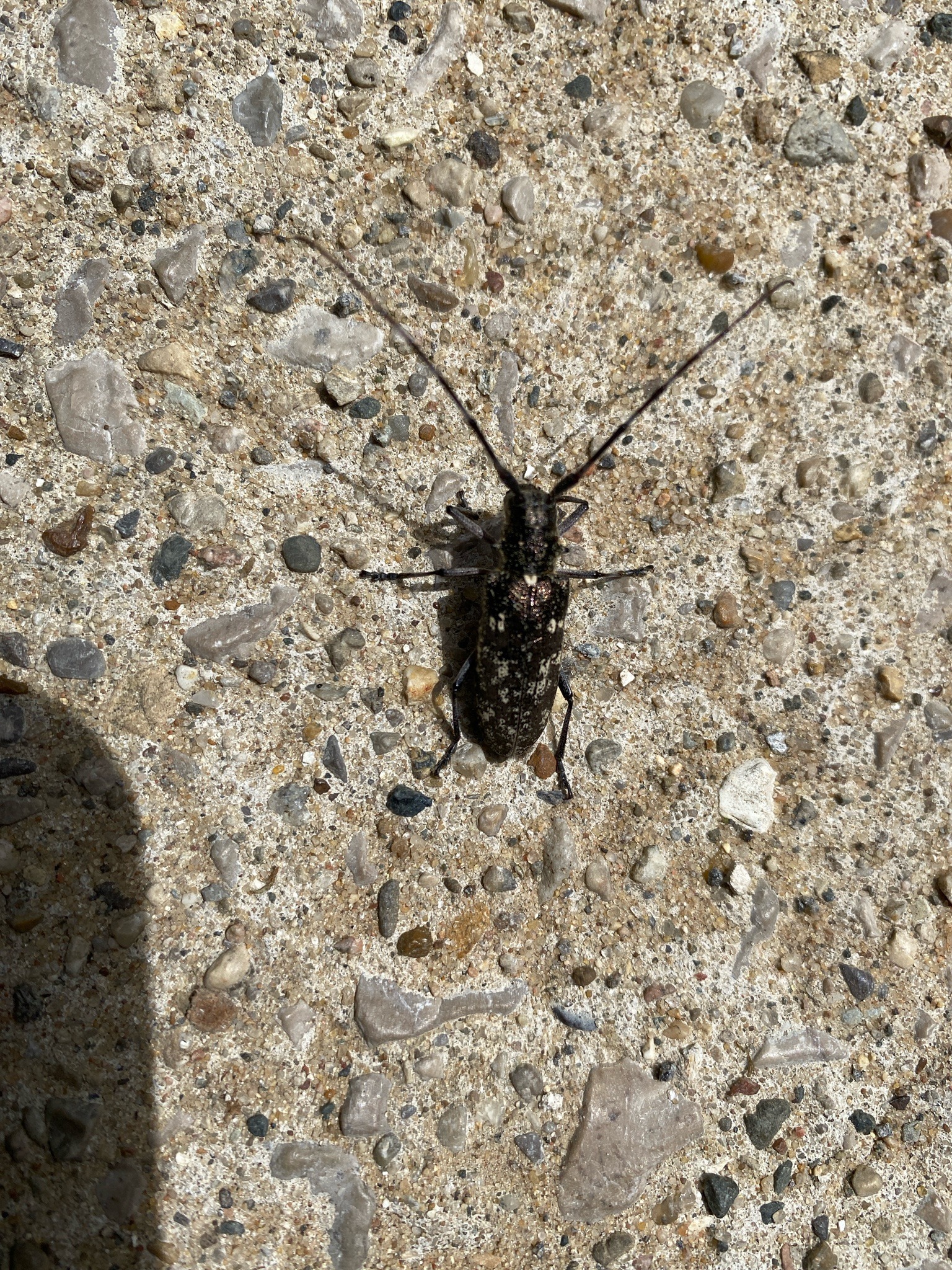
Community identification
White-spotted Sawyer
Monochamus scutellatus
- Order & Family
- Order: Coleoptera; Family: Cerambycidae
- Size
- 15 to 30 mm in length, with antennae that can be twice the length of the body in males.
Natural Habitat
Coniferous forests, specifically in areas with dying or recently felled pine, fir, and spruce trees.
Diet & Feeding
Larvae bore into and feed on the wood of dead or dying conifers; adults feed on the needles and bark of living twigs.
Behavior Patterns
They are active during the day and are strong fliers; they are often the first to colonize trees after forest fires or logging activities.
Risks & Benefits
They risk degrading Timber value through larval tunneling, but benefit ecosystems by assisting in the decomposition of dead wood; they do not bite humans but are often mistaken for invasive species like the Asian Longhorned Beetle.