
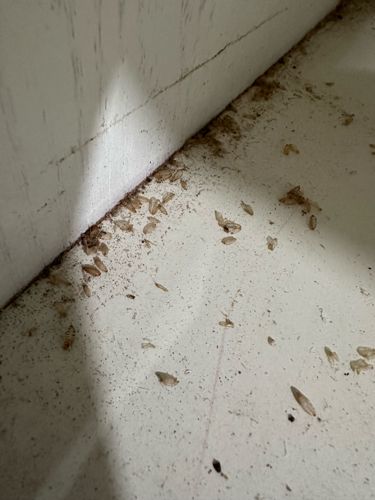
Booklice / Barklice
Psocid (multiple genera and species, e.g., Liposcelis spp., Trogium pulsatorium)
- Order & Family
- Psocodea (formerly Psocoptera)
- Size
- Typically 1-2 mm (0.04-0.08 inches) in length
Natural Habitat
Indoors, large populations of booklice indicate high humidity and potential mold growth, often found in damp basements, bathrooms, or storage areas. Outdoors, they live on tree bark, under leaves, and in other sheltered, moist environments.
Diet & Feeding
Booklice primarily feed on microscopic molds, fungi, starch, and organic detritus. They can infest books, paper, stored foods, and other materials containing these substances.
Behavior Patterns
Psocids are often found in damp, dark, and undisturbed areas. They are known for their ability to chew and their preference for mold and mildew. They are not strong flyers, even winged species, and are generally nocturnal or crepuscular. They reproduce quickly in favorable conditions.
Risks & Benefits
Booklice are generally harmless to humans, not biting or transmitting diseases. However, they can be a nuisance and indicate underlying moisture problems that could lead to mold growth in a home, which can cause respiratory issues or allergic reactions. They can also damage paper products or contaminate stored food. They have little to no known benefits for humans or the ecosystem, though outdoor species play a role in decomposition.