
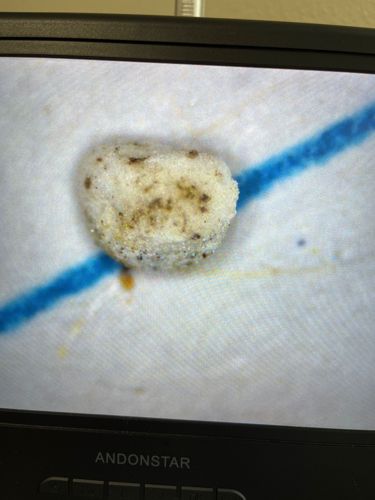
Case-bearing Clothes Moth (larva)
Tinea pellionella
- Order & Family
- Lepidoptera, Tineidae
- Size
- Larval stage can reach up to 1/2 inch (1.2 cm) in length, inside a case of approximately the same size.
Natural Habitat
Indoors, especially in dark, undisturbed areas like closets, attics, and storage containers. They feed on natural fibers.
Diet & Feeding
Keratin-containing materials, such as wool, silk, fur, feathers, felt, and other animal fibers. They may also feed on lint, dust, and synthetic blends soiled with food particles.
Behavior Patterns
The larva builds a silk case camouflaged with fibers and debris from its food source. It carries this case with it as it feeds and moves. They are typically slow-moving and prefer dark, secluded environments. The adult moth is small and prefers to run or hop rather than fly, especially when disturbed.
Risks & Benefits
Risk: Significant pest of textiles, clothing, carpets, and fur, causing damage to valuable items. They do not bite or transmit diseases. Benefit: No notable benefits, primarily considered a household pest.