
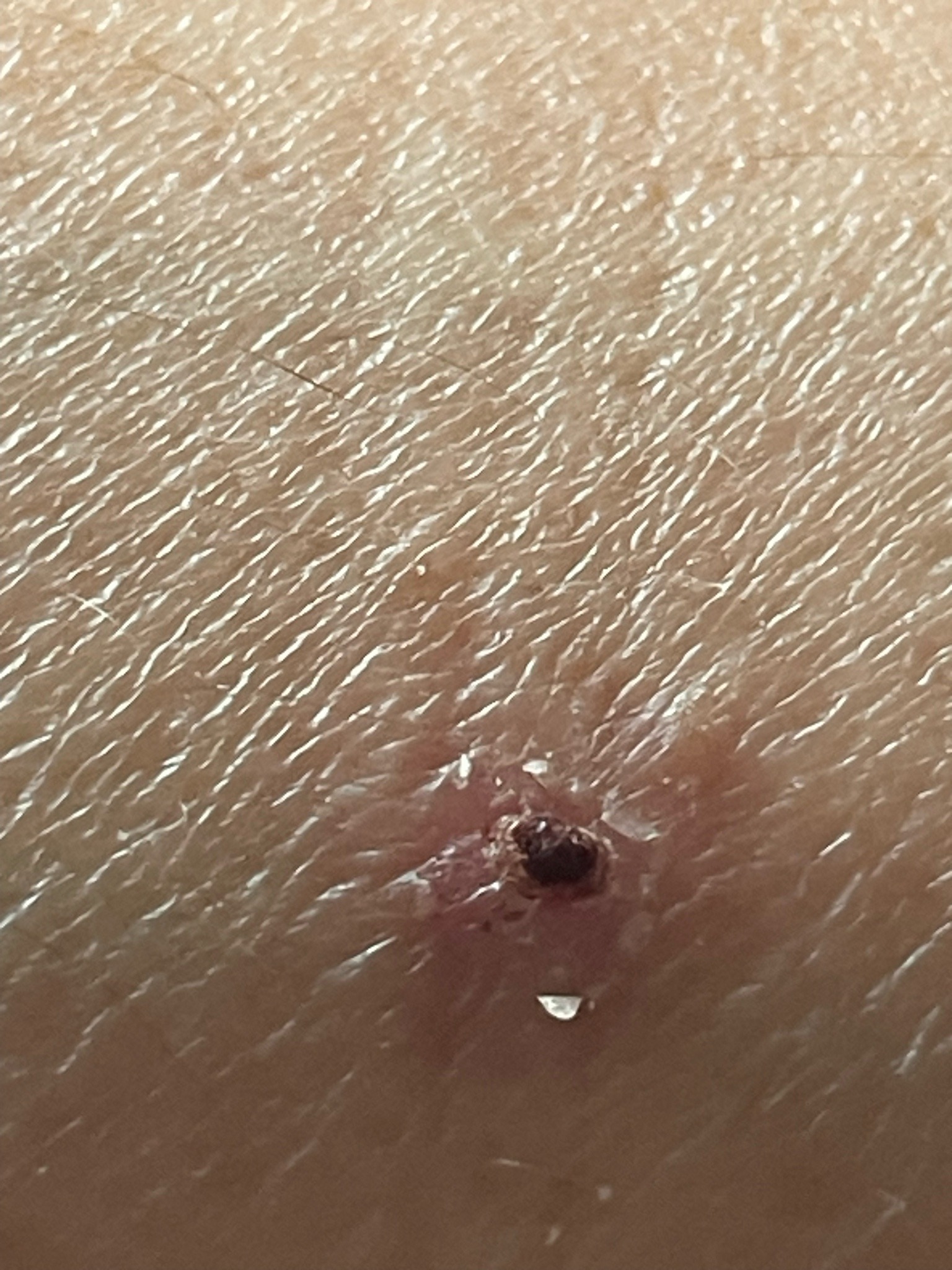
Community identification
Embedded Tick (likely Deer Tick or Dog Tick)
Ixodida (e.g., Ixodes scapularis or Dermacentor variabilis)
- Order & Family
- Ixodida (Order), Ixodidae (Family - Hard Ticks)
- Size
- 1 to 5 mm (unfed nymph to adult), swelling larger when engorged
Natural Habitat
Wooded areas, tall grasses, leaf litter, and brushy zones near animal host paths
Diet & Feeding
Hematophagous; feeds exclusively on the blood of mammals, birds, reptiles, and amphibians
Behavior Patterns
Engages in 'questing' by holding onto vegetation with rear legs and stretching front legs to latch onto passing hosts. Once attached, it inserts mouthparts into the skin to feed continuously over several days.
Risks & Benefits
Risks: Significant vector for pathogens causing tick-borne illnesses such as Lyme disease, Rocky Mountain spotted fever, and Anaplasmosis, along with localized skin irritation or secondary infection. Benefits: Serves as a food source for poultry, wild birds, small reptiles, and opossums.