
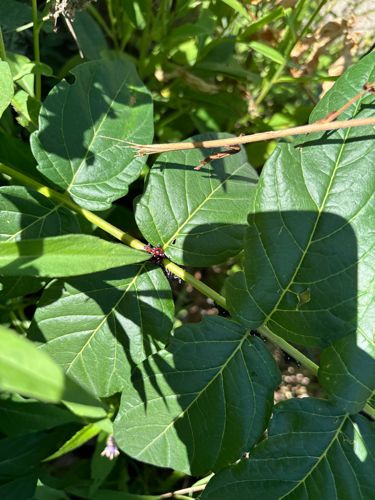
Spotted Lanternfly (nymphs)
Lycorma delicatula
- Order & Family
- Hemiptera, Fulgoridae
- Size
- First instar nymphs are typically 2-4 mm, while fourth instar nymphs can be up to 12 mm.
Natural Habitat
Forests, vineyards, orchards, agricultural areas, nurseries, and urban/suburban landscapes, often found on their host plants.
Diet & Feeding
Sap from a wide variety of plants, especially tree of heaven (Ailanthus altissima), grapevines, maples, birches, walnuts, and other woody plants.
Behavior Patterns
Nymphs and adults feed by sucking sap from the phloem of host plants. They can excrete large amounts of honeydew, a sticky, sugary substance, which can lead to the growth of sooty mold. They are highly invasive and can reproduce rapidly, leading to large populations.
Risks & Benefits
Significant agricultural pest, causing damage to crops like grapes, apples, and hops. Also impacts timber and ornamental trees. Can greatly reduce plant vigor and yield due to sap feeding and sooty mold growth. No direct benefits; considered harmful.