
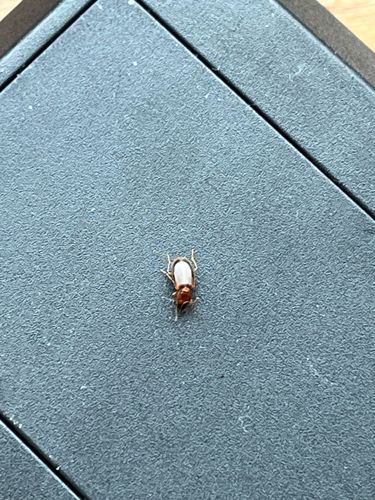
Confused Flour Beetle
Tribolium confusum
- Order & Family
- Order: Coleoptera, Family: Tenebrionidae
- Size
- Adults typically measure 3-5 mm (approximately 1/8 to 1/4 inch) in length.
Natural Habitat
This beetle is found worldwide, especially in temperate regions. It infests stored food products in various settings, including pantries, warehouses, grain elevators, and food processing facilities.
Diet & Feeding
The confused flour beetle primarily feeds on processed grain products such as flour, meal, cereals, pasta, and crackers. They can also infest seeds, nuts, dried fruits, drugs, and other stored dry goods.
Behavior Patterns
The confused flour beetle is a common pest of stored products. Both larvae and adults feed on grain products. They are long-lived, with adults often living over a year. Females can lay hundreds of eggs over their lifespan, which are sticky and can become coated with flour or meal, making them difficult to detect. Development from egg to adult takes approximately 4-7 weeks under optimal conditions. They are known to infest flour mills, bakeries, warehouses, and homes.
Risks & Benefits
Potential risks include significant economic damage to stored food products due to contamination and direct consumption. Their presence can lower the market value of goods. They do not bite or sting humans and are not known to transmit diseases. There are no known benefits to humans or the ecosystem from this pest species in artificial environments; their ecological role is primarily as decomposers in natural settings, but they are considered pests in stored food environments.