
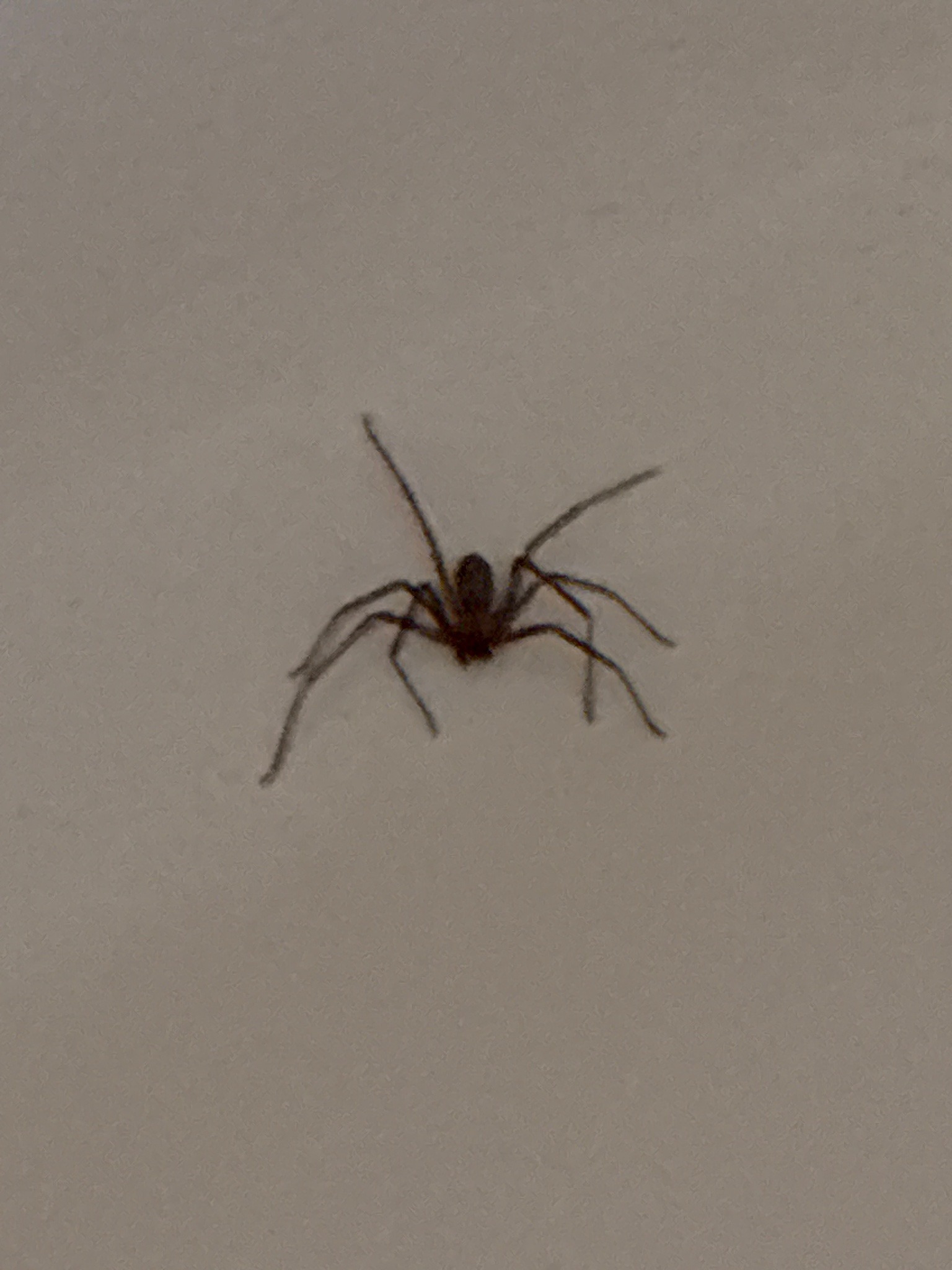
Giant house spider
Eratigena duellica
- Order & Family
- Araneae: Agelenidae
- Size
- Body length is typically 10–18 mm, but with its long legs, its total span can reach 75–100 mm.
Natural Habitat
Commonly found in residential areas, gardens, and inside human dwellings, particularly in corners, behind furniture, and in basements where they build funnel-shaped webs.
Diet & Feeding
An opportunistic predator that feeds on various insects and even other spiders caught in its web, or captured through its high-speed running on the ground.
Behavior Patterns
These are incredibly fast runners. They are predominantly nocturnal and create non-sticky funnel webs to trap prey. They are most visible in late summer and autumn when males wander in search of mates.
Risks & Benefits
They are largely harmless to humans. While they possess venom to subdue prey, their bite is rare and generally no more painful than a mild sting. They provide a significant benefit to the ecosystem and homeowners by controlling populations of pest insects.