
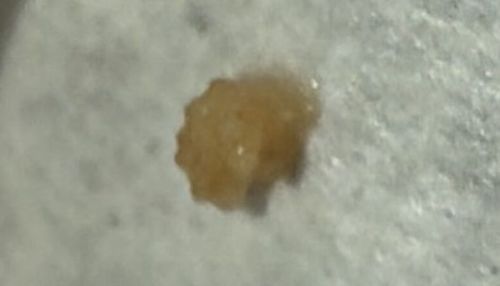
Community identification
Tonsil Stone (Calcified debris)
Tonsillolith
- Order & Family
- Not applicable (Not an insect/animal)
- Size
- Generally varies from roughly 1mm to over 1cm in diameter
Natural Habitat
Typically forms within the crevices (crypts) of human palatine tonsils
Diet & Feeding
Not applicable; formed from accumulation of cellular debris, food particles, mucus, and bacteria
Behavior Patterns
These are static calcifications, though they may be dislodged by coughing, sneezing, or manual removal
Risks & Benefits
Generally harmless but often cause halitosis (bad breath) and discomfort in the throat; no ecological benefits