
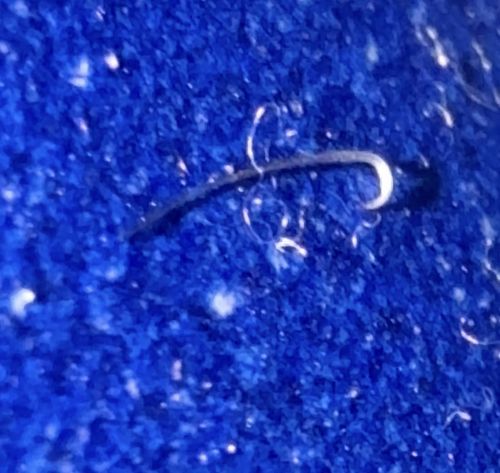
Community identification
Flea Larva
Ctenocephalides felis (most likely)
- Order & Family
- Order: Siphonaptera; Family: Pulicidae
- Size
- 2mm to 5mm in length
Natural Habitat
Typically found in carpets, pet bedding, floor cracks, and upholstery where host animals (cats/dogs) spend time.
Diet & Feeding
Scavengers that feed on organic debris, specifically 'flea dirt' (dried adult flea excrement containing undigested blood).
Behavior Patterns
Larvae avoid light (negatively phototactic) and move deep into fibers or crevices. They undergo three molts before spinning a cocoon to pupate.
Risks & Benefits
Risks include potential infestation of the home and pets, as well as serving as intermediate hosts for tapeworms. No ecological benefits within a household setting.